Wednesday, 29 February 2012

.another unexpected film - 50/50.

I've already mentioned that sometimes I wrongfully judge films that turn out to be great, and oftentimes I wouldn't have given them a chance if not for my husband.  This Friday night found us once again laughing through tears at 50/50 starring Joseph Gordon-Levitt and Seth Rogen.  Don't get me wrong, I've loved the films Gordon-Levitt has been in (Inception and (500) Days of Summer) but I'm not so much a fan of Rogen's films (Pineapple Express and Super Bad).

Source: imdb.com via Jade on Pinterest


However, this one proved to be a lovely film that portrays the realities of illness, friendship, family, and life's extraordinary, but not-so-glamorous moments.  I won't tell you too much other than we thoroughly enjoyed it, and it's well worth watching!

The film is based on the true-life experiences between screenwriter Will Reiser and actor Seth Rogan.  Reiser was diagnosed with cancer when he was just 24 years old; he coped by trying to write a comedy about having cancer, thus began the process of writing and making 50/50.  You can hear more in this interview with Terry Gross of NPR with Reiser and Gordon-Levitt.

Watch it!!

Monday, 27 February 2012

.sharing reflections during Lent.

Today I wanted to share a beautiful post written by my good friend and fellow blogger, Lindsey.  The post's title sums it up pretty well: Observing Lent When the Ashes Fade.  She likens the Lent season to New Years' because, similar to resolutions, our observations of Lent can often begin with good intentions but fade as the 40 days continue.  I certainly understand this and know full well when I set out to start a good habit or let go of a bad one that I'll probably fail miserably.

But, I don't think Lent is supposed to be a game to figure out whether our spiritual discipline wins over our flesh; instead, each moment we think about those habits we're forming or giving up, they're meant to remind us of Jesus in the wilderness, tempted by Satan and spiritually preparing for death.

Lindsey's post also reminded me that Christians who might have grown up with Easter their entire lives can often lose their enthusiasm for the season, or this time can seem 'stale.'  Sometimes we just need a renewed spirit to prepare.  Lindsey reminded me of my own renewal last year (I shared this story with her in the comments).

A few days before Easter my husband and I watched  The Passion (I’ve watched it a couple times now and I just can’t get past the rawness of it; the sight of blood in that way makes me nauseous, perhaps one reason I don’t watch it more). But as we watched it, and cried, and reacted to it, I gained a new excitement for Easter Sunday. I couldn’t wait to be in church singing hymns, sharing communion, and rejoicing that Christ lives! It was an amazing experience and I felt like after watching the film a few days before Easter I was better able to partake in the excitement, reminded what all the excitement was really for (something we can often forget as children caught up in the pastels of eggs, baskets, and new Sunday outfits).


As Christians, we sometimes need reminders of the amazing thing Jesus did for us. Even though the film has its flaws, it reminded me of his awesome act of LOVE (I quite literally feel like I’m in a ‘wilderness’ while watching it). This year, I’m sure things will be different because we don’t have a church we’re attending right now…instead, we’ve been getting up Sundays and reading from the Bible, from Take This Bread, or listening to sermons by Barbara Brown Taylor (I’m reading one of her books, Speaking of Sin, for Lent).  But even if this year is different I will always remember that sense of awe from last year, swaying in the Episcopal church, tearing up, and feeling genuinely excited and amazed.


Thanks to my friend, Lindsey for writing this post and for reminding me of that renewal we need and long for in this Lent/Easter season.  Lindsey has decided to write a post each Monday of Lent and I'll definitely be tuning in.  You can access her blog, Negotiating With Chaos, here
image from here.

Saturday, 25 February 2012

.wrestling with The Help.

I've been wrestling with my opinions of The Help since my husband shared with me this critical blog post, which discusses some of the film's issues with unrealistic and nostalgic images of the real racial issues of 1960s South.  Since then I've heard numerous opinions about how the film presents race, class, and gender issues.  My main problem with this first criticism I read was that it was written by a black man.  Although it's important for me to take into consideration his view, I wanted to hear what black women had to say about it.
Source: imdb.com via Jade on Pinterest

Viola Davis, who played Aibileen in the film, has received backlash about her role, accused of 'selling out' and that she was surprisingly 'reduced to playing a maid in 2011.'   Davis, in an interview with NPR, argued that she did not see herself being 'reduced' in this way or made into a stereotype.  Instead, Davis said, "I saw [Aibileen] going on a journey. I saw her having humor and heart and intelligence. I saw her as having duality. And that's what I look for above anything else. Because usually, that is what's missing."


After viewing Melissa Harris-Perry's discussion of the film on her new show on MSNBC, I am beginning to understand the political/social problems within The Help - -

Source: google.com via Jade on Pinterest


Even among black women, it seems there are conflicting opinions about the film.  It's clear that Davis does not see Aibileen in the negative ways that others like Melissa Harris-Perry does.  After watching her segment on The Help, I can see why we need to be more critical and consider why the film can be problematic.  Harris-Perry and guests of the show argue that the film presents itself as 'based on true events' despite historical inaccuracies; it can be (and is often) seen as a 'coming of age' story for a white young woman (Skeeter) who gives voice to 'the help' in her community (historically, these women were more than likely part of their own movements which gave them a voice, and still are working for civil rights today); and the film has commodified (made commercial/product) the oppression of blacks in the 1960s (specifically black domestics).  


Perhaps what helped me to respect Harris-Perry's segment most is that one of her guests was Barbara Young, an organizer of National Domestic Workers Alliance who spoke on behalf of contemporary domestic workers.  Perhaps her opinion, and the black domestics she represented, was what I was waiting to hear all along; I wanted to hear what real domestics had to say about the film's representation.  She had both positive and negative opinions to share: (Positives) - she suggested that people who might not be interested in the Civil Rights Movement will be able to view some of these events and issues in the film; she was also  touched by the relationship it presented between the domestics and the children they kept. (Negatives) - she agreed that there were numerous historical inaccuracies; and that the women's voices were being 'given to them' by a young, educated white woman, both problematic issues.


Having read the book several months before the movie came out, I didn't originally see Skeeter as 'giving voice' to the women because the book tells the story from different views, alternating between the characters Aibileen, Skeeter, and Minny; however, the book is itself written by a white woman.  For me, I was able to appreciate the gender issues it presented: white women emphasizing child-bearing and home-keeping rather than education and independence as well as domestic violence against women.  As a Women's Studies student I was glad that it presented these issues for audiences who might not normally consider them, even if they were 'sugar-coated' a bit (for example: we don't see Minny's husband beat her, we only see the aftermath; Skeeter is independent and unmarried at the end of the film, but not in the book - I'm still not sure why they chose to do this).  


The guests on Harris-Perry's show point to a similar problematic example in the film when Yule May, a college-educated black domestic, is accused of stealing and beaten by white police officers.  Only a few scenes later she is shown comfortably healed and happy in her prison community of women - not realistic! Again, this was something I overlooked in my first viewing of the film, but noted after Harris-Perry's segment.


As I continue to synthesize these issues and opinions, I have a better understanding why people have criticized the film so much for its treatment of race issues.  I'm not sure that I'll be tossing out my film or book and I'll still recommend that people read and watch The Help.  In addition, I've taken heed to Barbara Young's advice.  She suggests that if viewers enjoy the film, they should try supporting the domestic workers in their communities, helping them pass legislature to improve working conditions.  


To learn more, watch Melissa Harris-Perry's segment on The Help
...any thoughts??

Wednesday, 22 February 2012

.ashes and Lent.

"...For dust you are and to dust you will return." - - Genesis 3:19b

This is a repost of a revised poem I wrote two years ago after attending a Catholic funeral service with my husband held on Ash Wednesday.  Since that experience, Ash Wednesday and Lent have reminded me of the Jews during the Holocaust.  The image of the ashes drawn on foreheads reminds me of the ashes of those whose lives were cruelly taken from them. For me, ashes have always brought to mind the image of the Holocaust victims (partly, I think, because I was in a Holocaust play and though we used sand instead of ashes to represent the number of deaths, the visual image of salt being poured from a bowl represented their ashes, the dust to which they returned).

Another reason is because Ash Wednesday is the one day when Christians openly display an outward physical symbol of their faith for everyone to see. Just as the yellow star of David was worn by the Jews to show their faith (though under very different circumstances; they did not choose to wear them, but were instead forced to), we wear our crosses of ash to show to whom we belong and what we believe.

Like I said earlier I wrote this poem two years ago and I've since then changed a couple things about it.  For example I had a line that said they wore them "proudly and without shame," but after further reading on the subject, I don't think this would have been true.  They didn't choose to wear this outward symbol of faith and heritage.  Being a non-Jew (which means I can never understand this) I always thought they might proudly wear them or display them (now) as witness to their history.  I think it's much more complicated than that, and I think there are probably many differing opinions and personal connections to the yellow stars.  Either way, their stars - in my mind when I watch Holocaust films or read books - are powerful symbols of their faith and heritage, one that might have been forced on them by oppressors, but can never be forgotten.  The stars bear witness of their history, retelling their story each time one is displayed.

Source: js.emory.edu via Jade on Pinterest


ashes

made into crosses.
fingerprints
traveling across smooth,
and wrinkled
foreheads.
we stand like mirrors
wearing our small signs
out into the dark world -
small lights
traveling into cold court rooms,
office buildings,
and classrooms.
they wore theirs on battlefields,
on streets,
and in camps -
yellow canvas patches,
stars shining on their dark clothes.
they used needles and thread
to sew them -
their cross to bear.
they were piled next to their
suitcases,
their shoes,
and their
ashes.


This is a photo from the Holocaust play I performed in college - I Never Saw Another Butterfly; my character, Raja collects the stars of the Terezin children...

Pouring salt - a visual representation of the lives lost in the Holocaust

Tuesday, 21 February 2012

.small people got small houses.

Since Scott and I first read about 'tiny' or 'small' houses (I make this distinction because there's, ironically, a big difference between tiny and small homes) we've been doing research and looking into buying a 'small' house to build on farmland someday. [You can read more about tiny and small houses at the Tiny House Blog and Tumbleweed Tiny House Company is where you can purchase the house plans (and download instantly!).

...you have your Bungalow Tiny Houses...
Source: google.com via Jade on Pinterest

...Tiny houses to-go...
...and the Small houses:

(the paint job doesn't do this small house justice in my opinion)

After living in a small one-bedroom apartment with a tiny balcony in a bustling city-like area (I say 'city-like' because it's more like a city than where we grew up but some city folk would probably laugh at us calling it that) when the time comes for us to move we'll be ready to embark on our dream of owning land, gardening, and adopting stray animals.  You might ask why we're not simply going to just buy a 'regular' size house since we'll have lived in small quarters the first five years of our marriage.  Well, the answer is for simplicity.  If you have less house you have less house to clean, less house to acquire a bunch of junk (you might still acquire it but you'll have to put it somewhere else) and I know what comes along with buying old houses - lots of repairs.  I also just like this idea of a cozy little place in the valley near a mountain, burrowed by snow in winter.

Who knows, though? We might very well change our minds by the time we're looking for a place to put down our roots in a couple more years (or God might have other plans for us), but until then we're enjoying the idea of filling our little house with wall-to-wall bookshelves and large windows for viewing the outdoors.  With the close quarters comes deliberate planning of space; every inch will need to be utilized purposefully, so we've already been thinking of ways to do this.  One way is having a 'loft' as a bedroom, which I quite love! We're both short anyway (and odds are our kids will be too) so sloping ceilings would be the perfect touch for cozy living.


Some other small space ideas...


Saturday, 18 February 2012

.a new 'body' of work: creative nonfiction.

In high school and college I always avoided reading or having to write 'creative non-fiction.' I felt like the term itself was confusing since it basically, in my naive mind, described two very different writing genres.  Non-fiction, to me, meant boring facts laid out in bland jargon and hard-to-pronounce terms - mostly my view of nonfiction came from science textbooks.  Instead I browsed the Fiction Bestseller lists, which were a good fit for me at the time.

Needless to say, I've since learned that creative non-fiction is, indeed, a fascinating genre of writing, one that I quite enjoy both reading and writing.  For my final quarter as a grad student I've decided to take a creative non-fiction course. I already enjoyed Feminist Memoir last year, my first real encounter with creative non-fiction, and I'm currently working on a creative memoir essay for my Writing the Body course.

For my 'body essay' I've decided to intersperse Sandra Bartky's theories of the female body with my own experiences, specifically describing times in my life that I've felt my body has been controlled or not controlled, despite or because of societal norms.  It's made up of four different chapters, the first starting with my body image as a child, choosing for myself whether I wanted to be a tomboy or 'girly' girl, wearing dresses or dirt.  The second describes the terrifying details of my first-grade classroom when we were forced to train the very movements and natural tendencies in our bodies, keeping our feet in small boxes made of strips of tape on the floor beneath our desks.  The third chapter details a time in my life that my parents and I lovingly refer to as my "Butterfinger Girl" phase; I gained weight because of my changing body and metabolism.  And the final (for now) describes my early high school years of rigorous physical training for sports, my body resembling that of a boy athlete rather than a teenage girl.

Some of the fascinating creative non-fiction we've been reading in this class include:


Plain Text: Essays by Nancy Mairs


And a couple books I purchased today at a used bookstore (hopefully I'll get around to reading them this summer):


Wednesday, 15 February 2012

.coming soon: birds!.

Scott bought me this cute bird feeder for Valentines' day and we hung it up on our balcony right away.  Even though we might not sight some birds for a while I can't wait to see them when the weather warms up.  Our male cat, Sammy, seems to already understand what it's for - he sits staring at it out the window.  The cylinder of food that came with it is 'safflower' which is supposed to attract chickadees, titmice, and (one of my favorites) cardinals!  I already saw a couple of cardinals chilling in the trees at my school so hopefully we'll sight some soon on our porch.


Until then these cardinals will have to do...some prints by Charley Harper, an Ohio artist.  We first saw these in a museum gift shop and now it seems like we see them everywhere.  But aren't they great?!  His works of other birds and animals are quite fascinating too!


You can see more of his originals here; I love that he does mostly animals and nature.  And I couldn't resist including this poster, The Edge of Appalachia...love it!


photos from here, here, herehere, here, here, and here.

Sunday, 12 February 2012

.perfect Valentine songs.

Not much to blog about the last couple of days (unless I want to repost the reflection journals I've had to write for school or the teaching units for the Appalachian class I'm building - I'll spare you!) Instead, here are some songs I've been enjoying...they're perfect for getting in a Valentines' Day kind of mood...

Kina Grannis - "Valentine"

Kina Grannis - "Together" - - I'm loving her; thanks to my husband for putting her on the 2-year anniversary mix cd he made me :)

Kina Grannis - "In Your Arms" (yes, another one by her and this vid is so cute!)

"Life's a Happy Song" - from the new Muppets Movie (another song on the mix cd! such a cute movie!)

The Beatles - "I Will" (gotta put a Beatles song on here, and I've been teaching this one to my guitar/uke girls - it's so cute on the ukulele)

Jason Miraz - "I'm Yours" (I'm kinda tired of this song but my husband enjoys it so this is for him..)

Monday, 6 February 2012

.all things Valentines'.

It's February which means Valentines' Day will be here before we know it! My husband told me a cute little dialogue he had with his students this past week and I thought I'd share it.  He was discussing the concept of "love"and after his students had given the expected terms (trust, fellowship, support) he asked for a word that started with a "v." One of the first responses was "Valentines' Day?!" To which my husband replied, "No. And I don't even like Valentines' Day that much."  A girl in the front just couldn't let this one go so she asked, "what do you mean you don't like Valentines' Day?"  He replied, "It's just another commodified holiday.  I don't need one day out of the year to be reminded to tell my wife I love her. I tell her everyday."  -  Gotta love him.  (and the word he was looking for was 'vulnerable').  Yes, I'm a pretty lucky girl!


Last year we did the usual 'dinner and a movie' although our movie was not so traditional: Blue Valentine.  If you've seen the film (or know anything about it) you'll know it definitely wasn't a traditional 'valentine' movie despite the title, but we knew what we were getting into so I guess I can't really complain.  Overall it was a good film, just maybe not the best for celebrating Valentines' Day. This year I've suggested we go more traditional with The Vow.


Last night Scott and I caught up on one of our shows, Parks and Recreation, and it was the second 'GALentines' Day' episode.  Galentines is celebrated Feb. 13th and, according to Leslie Knope, it's a day to celebrate all the gal-friends in your life.  In case you celebrate this holiday, or would like to begin a new tradition with your gal-pals, I've included some gift suggestions below.  These are a few things I've seen lately (mostly for book lovers) that I think would be perfect 'Galentines' Day' gifts - -
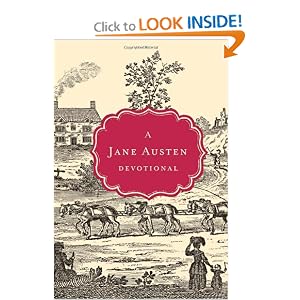
A Jane Austen Devotional  - This little book looks adorable.  It's made of fabric on the outside and each devotion includes an excerpt from one of Austen's novels in connection to a Bible verse.

Owl Bookends from The Company Store - so cute!

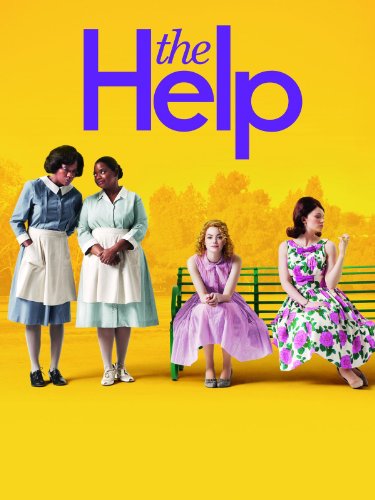
The Help book or DVD

Extremely Loud and Incredibly Close - I've had so many friends suggest this book and a friend of mine is currently letting me borrow it - enjoying it so far!

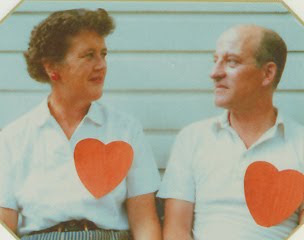
If you loved the movie Julie and Julia (I was quite obsessed with it the first year of our marriage) you'll love these photos.  Julia and Paul Child took pictures each year for Valentines' Day and sent them to their friends.  They seem like such an adorably romantic couple, so I'm ending this post with a few of their homemade valentines as well as some contemporary photos of a couple who were inspired by them (they're engagement pictures I'm guessing).

Adorable!

Haha...it takes different strokes I guess...


Love this! The tag says: "You're the butter to my bread"

For more of these photos visit: greenweddingshoes.com

photos from here and here

Sunday, 5 February 2012

.on my birth and football.

Since it's Super Bowl Sunday I thought I'd share a piece I wrote about my birth and football for my Feminist Theory: Writing the Body course.  After reading a brief excerpt of Rebecca Walker's birth story in her memoir Black, White, and Jewish, we were given the option to compose our own birth stories.

I had already written a version of my birth story for the Feminist Memoir class I took last year, so I decided to write another version, one that was more male-oriented, looking more at my dad's role in my birth.  I think most would agree that our mothers are often considered much more in the writing and remembering of our birth stories, because they are the ones physically 'giving birth.'  But, it's also important to consider that the day of birth is the first time the father can 'physically' bond with the child outside the mother's belly (I emphasize physical because they can bond by speaking to the child or feeling the baby kick).  The mother is physically and emotionally bonding with the baby as s/he forms within her, but the father is only able to physically bond with the child once s/he emerges from the womb.  I hinted at this in my juxtaposition of my emergence from my mother's belly and resting on my dad's 'new daddy-belly.'

"On my birth and football"

I should have known from my birth story that football would forever be a significance when it comes to the men in my life. A significance that couldn’t help presenting itself on my wedding day; my father’s toast ending with a Cowboys t-shirt given to me with the command to “wear it when you’re in our house.” To which my father-in-law started his toast with a Colts “rebuttal.” All I could do was smile to myself, glimpsing my husband’s groom’s cake – a football field with a giant Indianapolis Colts emblem – and raise my glass for a toast to a new relationship with a man and football.

- - -
It was a Monday night and the Dallas Cowboys were playing. My mom started having strong contractions so dad set the VCR before they drove the hour and a half to mom’s OBGYN in Tennessee. They checked her in, but I was in no hurry to make my grand arrival. They walked the parking lot together, mom in her tight Keds, her feet swollen in her shoes, dad rubbing her back and holding her clammy hand. I was their first child so everything was harder than my brother’s smooth, easy delivery. She felt me standing straight up in her stomach, stretching my legs and arms inside her, but I wasn’t coming out until I was ready. When I finally arrived Tuesday afternoon, the one thing they remember most was the scream that erupted the moment I came out. Mom says it was me, yelling, “I am Woman, hear me roar,” and I haven’t stopped since.

I’ve seen the video of the nurses wiping me down, my chubby body shivering – how cold we must feel in that sterile, frigid room, after being enveloped in warmth and heartbeats. One of the nurses began filming then, because I saw mom, worn out but gleaming, and dad’s young face, his dark curly hair and mustache that he would soon shave because it left scratches on my face when he held me. The camera spanned the room, showing the nurses dipping my tiny paws in ink and weighing me, my fat body left on naked, natural display. I lay there, formed and ready to take on the changes of life – small fingers that would grow calluses from years of playing guitar; blue eyes that would turn green, mom swears to match the shade of my name; short tuffs of hair that would turn into stubborn fuzz for most of middle school; strong thighs perfect for swimming. The nurses swaddled me in a blanket and mom says that’s the only time my cries softened, a brief reminder of the comforting envelopment my mother’s belly had provided.
I saw my grandparents and uncle “ooing” and “ahhing,” pointing at me through the glass window – the first grandchild, such large shoes to fill with such tiny feet to show for it. When they finally brought me home, dad put in the taped Dallas game and I napped on his new-daddy belly, comforted by his breathing and the sound of football in the background. Mom took our picture, me slumbering mouth wide open, dad smiling contentedly.
- - -
From that snapshot on, football became a comfort for me, and a connection to the male figure in my life. Later, when I started dating my husband – the only guy I ever dated who watched football – he was amazed at the time it took for me to fall asleep once a game was on. Within seconds, he says, I am snoring contentedly, hushed by the sounds of the commentators, crowds, and ESPN theme music. One day I realized it must have become a kind of lullaby for me - - Sunday evenings with football on after church, mom and me slumbering on the couch, dad quietly enjoying his game. I grew up understanding this male pastime, an understanding that many might not comprehend. I realize most girls wouldn’t be okay with a Peyton Manning poster in their bedroom; they might think that could be a clue of my husband’s “unhealthy” relationship to a football player. But, then again, my dad taped Monday Night Football the day before I was born so he could share the experience of watching our first game together.

Thursday, 2 February 2012

.a new term to explore!.

Fellow blogger, Wendy Welch, a used bookstore owner in the Appalachian mountains of Virginia who holds her PhD in Ethnography, is currently working on a book that will be published very soon.  While reading one of her posts, I came upon her term, "trailer park intellectuals" which she defines as: "people who are intelligent yet didn’t get a higher education, who often have jobs that don’t require–or perhaps even value–their innate smartness and problem-solving abilities."  Since reading her interesting concept I've been fascinated by this idea, especially since I've been 'building' an Appalachian composition class focusing on the stereotypes, traditions, and controversies (Mountaintop Removal, marijuana, moonshine, methamphetamine production, blurring lines of church and state) in the Appalachian region.  My class is currently titled "Place and Heritage: Where In the World Is Appalachia?"

Since learning about this term Wendy and I have communicated briefly about the possibility of the term having negative connotations.  Negative or not, I thought the term (and the people it serves to define) would definitely be an interesting concept to discuss in my future Appalachian class (when I do get to teach it, that is).  In the Composition/Rhetoric course I'm currently taking, we've been reading lots of articles that discuss the working-class student in the academy and the transitions they must make within this new discourse community.  This term seemed to relate, somewhat, to some of the ideas expressed in those articles (related blog posts coming soon!).  And as a student/teacher from a working-class family, I understand first-hand how the language of the academy can seem 'exclusive.' Currently, I think society (and most people) have a certain person/people, language, and conventions in mind when they think 'intellectual,' and I think and agree that it should be changed!  There are many different kinds of 'intellectual' and many different distinctions that people might not consider - in my own family, my dad gutted, designed, and rebuilt the entire inside of our Sears-Roebuck house and my mother can cross-stitch any pattern she sees from memory.  I'm proud of the intellectuals I came from and the intellectual I've become.  Perhaps it might do us all some good in considering: what does 'intellectual' really mean? 

Getting back to Wendy's term I thought it would be engaging to ask my current ENG 102 students what they thought about the term - a somewhat 'objective' audience since they're not from the Appalachian region. The students come from lower-middle to middle-class background, some from rural farm towns in Ohio and others from more urbanized centers like Cincinnati and Columbus.  The university is public liberal arts and my students' majors range from nursing to engineering to primary education.  I framed the discussion by writing the term, 'trailer park intellectuals' on the board and asking them two questions:

(1) seeing this term for the first time what do you think this term means?
(2) do you think it has negative/positive/both connotations?

My students wrote their answers anonymously on scraps of paper and handed them in, and then we discussed it briefly as a class.  Students were eager to share their ideas and it seemed to really spark some interest among the group.  Here are some highlights from their responses (the #s refer to the question they answered from above)...

(1) the first reaction that I get is poor or I don't know why but redneck (2) the term sounds negative to me...

(1) I feel as if it is speaking upon a low-class citizen.  (2) I would feel offended to be called something with the word 'trailer park'


(1) Trailer park intellectuals seems to [refer to] someone from a lower income or class background who show some wisdom despite [their] surrounding (2) I believe it can be both taken negatively as degrading and positively as a sense of pride in the same way terms such as 'ghetto' or 'redneck' have been


(1) people who are really creative in a trailer park style, example: someone who wants a truck bed hot tub (2) white trash or poor


(1) people that live in a trailer park that are really resourceful with what they have (2) It could be negative if people talk down [to] them because they don't have a lot of money


(1) refers to someone who appears to be uneducated (2) I feel this term perpetuates a negative appeal


(*this one was very interesting and probably the most unlike the rest) - - (1) it means someone who knows a lot about trailer home parks (2) could be both because someone is needed to design the park and make sure it runs efficiently like an architect, but it could be used negatively to say all the person knows is about trailers, so must be low class


(1) intellectuals who live in a trailer park (2) it sort of implies that you are a smart trailer trash person which may not be a bad thing?


(1) I would think this means something nasty.  If you get called anything that involves 'trailer' it means you're trashy, dirty, and poor (2) this is negative


(*another one I found quite interesting in the words s/he chose) - - (1) it sounds like redneck 'smarts' (2) definitely negative because when you hear trailer park people [you] automatically think trash or redneck


(1) I think it means people who come from a poor background, but became educated and wealthier than they were growing up (2) It can have both.  They are saying you come from lower class people, but also saying you rose above it


(*yet another interesting observation) - - (1) sounds like someone who thinks they are very informed on a topic and will argue about it, but is only informed on one side of the issue (2) definitely has negative connotations basically sounds like an ignorant American


(1) People who come from bad situations but thrive (Oprah) (2) it would be insulting


(1) I think of someone who, though they may not be college-educated, are still 'well read,' or intelligent.  (2) It seems like a very back-handed compliment, and it does have negative connotations.

I thought all their insights were certainly interesting, considering their own lower- to middle-class backgrounds.  Many of the students I've taught at this school are first-generation (like me) and working-class, often working to pay for college.  I think many of them took 'offense' to the 'trailer park' because of the connotations that can often come from it thanks to television, movies, and the media in general.  When I told them why I was asking for their opinions, in connection to my Appalachian background, they said that they didn't think of the term as necessarily 'regional' but rather 'lower class background' around the world (although some did refer to 'redneck' and 'white trash' in their responses and those terms seem to be regional).  What an interesting conversation we had as a class!

Thank you to Wendy Welch for opening up this interesting discussion!  Readers, feel free to share your thoughts on the term 'trailer park intellectuals.' *Since writing this blog post, Wendy has decided to go with another term for her book: 'mountain intellectuals,' one that might not be taken so negatively (see Wendy's comment below).

*Apparently there's a reading list on Amazon called: "The Trailer Park Intellectual's Preferred Reading List"
picture came from here

Wednesday, 1 February 2012

.living comfortably vs. living fully.

The past two weeks have been a bit stressful.  I'm sure if I was a more normal person and didn't always have to feel like the growing 'to-do list' has a conspiracy against me I wouldn't feel this way, but I do.  This trait of mine can be both a positive and negative - -

positive: I tend to get things done early instead of waiting to the last minute and procrastinating
negative: until I get those things done they're weighing on me and I can't even sleep at night.  The following picture illustrates this pretty well except even when I've been working lately I've been thinking of the many other things I need to be working on.


Having been a student in higher ed for the past 6 years I've gotten used to this feeling, but now that I'm in my last semester I'm ready to just throw up my hands and say, "Enough!"  I know once I get out into 'the real world' of the workplace I'll have similar deadlines and to-do lists, but there's just something about the way I've been feeling lately that makes me feel uncomfortable.  My school/work life seems like it's dragging me through everyday rather than being the other way around.  Don't get me wrong - this quarter is nothing like the challenge of last quarter.  Right now my classes are going well, I love my students, and for the most part I'm not working on homework the entire weekend.  But these past couple of weeks have been trying on my nerves and I just want to be back on an "easy plateau," as Ryan Adams would say.

Having said all this, last night I read a quote in my devotional that really helped me (and I know this quote is probably meant for people going through much worse - let's face it, I'm just getting bogged down with 'stuff to do' but I'm well aware of all the blessings I have: a loving, encouraging partner, two jobs that I love, a supportive family, a comfortable apartment, and two playfully crazy cats).  All this aside, this quote did help me see that life's not always going to "comfortable" or "easy" the way we might want it to be.  That's a good thing, though we might not see it that way at the time.

"Each person has a spiritual obligation before God to learn how to live well, to live fully, as opposed to knowing only how to live comfortably" - Luci Swindoll


Who doesn't want to live a comfortable life?  We yearn for moments when we can wrap ourselves in a soft comforter, grasp a mug of hot tea in our hands, and listen to the warm crackling fire in the fireplace [...] When God provides such times of comfort, we can thank him for that gift.  But when days come that are far from comfortable, we can then take comfort in the fact that God is teaching us to live well, to live fully.  He has more for us in life than just to live comfortably" (from Take My Heart, Oh God: Riches from the Greatest Christian Writers of All Time)

I have to say when I read the line about cuddling up on the couch (preferably without a care in the world) to say I was 'yearning' for it would have been an understatement (maybe it just needs to snow so some of us can slow down and regroup). But this devotion was a comfort in itself because of it's message: when we feel like life seems 'uncomfortable' it might just be more 'full.'

picture form here