Showing posts with label service-learning. Show all posts

Wednesday, 16 May 2012

Super Tuesday

Yesterday was pretty amazing. . .

First, I got up early and headed to Kroger to purchase a small veggie tray and some honey buns (I realize now what an odd pairing this is).  Then I met up with one of my classmates (K) from my Feminist Theory course.  Together we drove to a local women's shelter/family violence prevention center to participate in a small service-project we put together for our Women's Studies class.

Although we were both very excited (because we would be conducting a creative exploration session, which included writing, creating art, listening/reading poetry) neither of us was very nervous.  I told K that I was afraid we wouldn't be able to do the project after all, thinking we were both intuitively suspecting an unexpected cancellation (I've learned things can fall through last minute with non-profits).  When we found the center I finally felt a wave of nervousness because there were gates and a call box for us to "state our names and reason for visiting."  Inside the gates, we found a parking spot and walked to the visitors' entrance.  Inside, it resembled a dentist's office: chairs and small end tables with magazines and plastic toys and games for children.  We were met with yet another call button, and a friendly-looking woman emerged from behind the window.

She led us to the small room where we would do our activities with the women.  It was perhaps the first time either of us had really thought the women would already be there; they weren't in the room, but they were waking up in the rooms around us, rooms where they were staying temporarily.

We spread out the art supplies (crayons, markers, glitter pens, drawing paper) and small notebooks and pens, putting the snacks on a side table.  In a few minutes the first young woman (appeared to be in her early 20s) entered the room wearing lounge pants, a sweatshirt, and carrying her purse.  Her eyes lit up when she saw the supplies on the table.   She asked if we were going to be doing art; K and I shared a smile and told her we were indeed going to be doing some art - we were hoping to have a great time with them!  She seemed excited and told us most of the visitors just sat and talked to them and they answered questions and such.  We told her we hoped to have some fun with them today, and that K and I would both be participating in all the activities too, drawing and writing along with them.

More women entered the room and we introduced ourselves to one another (most of the women appeared to be in their 20s and 30s, one woman was pregnant, and we later learned that all of them had children - they lovingly shared photos of their children with us!).  In all we had six women in our little class, a perfectly intimate gathering.

We started by tossing a ball of yarn around and sharing our names and our favorite things to do.  In the end, we each held a piece of the yarn, connected by the web it made around the table.  Then, K led us in a creative visualization, taking us through "the house of our senses," traveling through the rooms of sight, smell, taste, touch, and smell.

Next, I read a poem called "The Invitation" aloud and then we passed it around so the women could choose a stanza that spoke to them.  They spent the next half hour creating a piece of art from the poem, using the words or images that spoke to them.  What was so neat about this activity was that one of the workers at the center said they could have a smoke/bathroom break and only one woman got up to use the restroom.  They said they'd rather stay there coloring and drawing!

After the break, we all wrote a letter about a day five years into the future, addressing it to either (1) our future selves or (2) someone else who would be proud of our accomplishments  We wrote about our ideal day, what we would be doing, who we would be with, why it would be "ideal," and what we would have to overcome to be there.  The women really seemed to enjoy this activity and a couple shared their writing with us.  They all said they would like to continue writing because they thought it was comforting and made them feel hopeful.  They each left with their notebooks and some art supplies.

After the session was over, K and I stuck around talking to some of the women; one woman let me hold her baby!  They said we should come back and visit them, and I know we're both interested in returning sometime soon, even if just to visit.  This experience was so unbelievable to me, and I can't believe how at ease I felt there.  Normally I think I would have felt anxious or nervous, but I felt so comfortable spending time with the women there.

When K and I returned to the car, we tried to process the experience together, considering how we felt and how it affected us.  We both had other things to go to that day so we were forced to move on quickly, but that experience will stay with me forever.  I hope we can go back again sometime soon!


Less than two hours after our session was over I had my creative nonfiction class to attend at school.  It wasn't an ordinary class, however - Joyce Dyer, a writer who resides in Akron, OH was visiting our class.  We read some of her stories for homework so I was excited to hear her talk to us about the reflective voice.  What I didn't know was that she identifies as an Appalachian because her parents moved to northern Appalachia when she was little and she grew up in a mining family.  When I got to class, one of my classmates handed me a book called, Bloodroot: Reflections on Place By Appalachian Women Writers, edited by Joyce Dyer.  I was so excited!! My professor had gotten it for me!

I sat and listened with the rest of the class as Dyer talked to us about reflective voice, showing us examples from other CNF writers, anxiously anticipating when I could go up and talk to her after class.  When class was over, I walked up to the front and told her I enjoyed her talk and that I was wondering if she could sign my book.  My classmate and professor had already told her about me (!) and so she asked me questions about what part of Appalachia I was from (pronouncing the same way we do in southern Appalachia) and signing my book.  She also told me about an Appalachian Writers Workshop in Kentucky.  If I had thought of it and known ahead of time I would've mentioned that I've studied with Rita Quillen, an Appalachian poet included in Bloodroot.  We said our goodbyes and I carried my signed book, admiring it in the hall.


I knew when I woke up Tuesday that my planner was packed full of stuff to do.  But I didn't know what a great day it would be.  Enough of that. . . here are some pictures!

Our art supplies! 
Showing off their drawings :)


My "drawing" of words that spoke to me in the poem
All their beautiful artwork
Bloodroot. . . I just love the cover!
She signed, "I'm so glad I met a fellow Appalachian. I hope to see you again."

Saturday, 11 June 2011

.Visual Analysis.

One of the assignments for our ENG 101 students requires them to write a visual analysis.  I was very excited to begin searching for some visuals for the service-learning class, centered around the African refugee experience/social work/interest.  So here are just a few of the ones I found (I kind of got carried away and I have two whole pages of links, but I'll probably be weeding through some).

Brilliant friends and readers, please give some feedback/analysis of one (or more) of these visuals! I'd be interested in reading what you think about them.


[Keep a Child Alive - this one has already caused quite a bit of controversy]

[Advertisement for End Poverty 2015 campaign]

[Millennium Promise Organization]


Thursday, 9 June 2011

.summer reading = fall course planning.

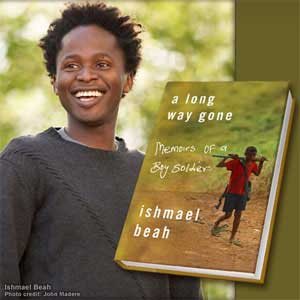
Even though my summer break could start any moment (if I would only finish grading that small pile of portfolios) I can't help thinking about the service-learning classes I'll be teaching in the fall.  So I've been reading like a madwoman trying to find some good material for my students.  Since the class will be mainly focusing on the African refugee situation I've begun reading Dave Eggers' What is the What and I think I've already found the excerpt I'll be sharing with my students.  I also plan to assign a chapter from Long Way Gone by Ishmael Beah and Little Bee by Chris Cleeve (if you haven't read them I highly recommend both!)

My professor of the Writing and Social Activism class suggested two other books that I'll be checking out soon: Say You're One of Them? by Uwem Akpan and They Poured Fire on Us From the Sky: The True Story of the Lost Boys of Sudan by Benson Deng, Alephonsion Deng, and Benjamin Ajak.  And The Lost Boys of Sudan documentary is currently sitting on the coffee table ready to be viewed.  If you can't tell, I'm very excited about the course!


***
This weekend I watched The Stoning of Soraya M. and even though it wasn't necessarily "enjoyable" to watch it was very powerful; the women and their stories have stuck with me.  I don't understand how we live in a world where this kind of violence still occurs and where women have no rights whatsoever. It's often easy to forget about these kinds of atrocities but they need to be in our reflections and prayers.  I only first learned that stoning was still in practice in my Women's Studies class in undergrad - yes, not until I was 19 did I learn that women are still punished unjustly for crimes by stoning (before then I only knew about it from the Bible when Jesus says, "Let he who is without sin cast the first stone" (John 8:7)  - it's not acceptable that our culture can turn such a blind eye to this issue.  Female Genital Mutilation (FGM) is another issue I did not learn about until college, and I know that high school might not be the place for this kind of education, but young people - women especially - need to be aware of these occurrences around the world.

Wednesday, 1 June 2011

.Block Party for the Refugees.

Last night we had a block party for the African refugees we've been working with this quarter.  It was held in their neighborhood and it was a huge success!

[Scott counting the jump ropers]


[There was lots of sidewalk chalk drawing hop-scotch, bubbles, and jump roping for the children and corn hole for the adults.] 


 [Gathering around the table]

 [An interpreter aiding Jenny in talking to the women about the sewing circle she will be starting this summer.  So exciting!]


[This is one of my students that I've often talked about in my posts]

 [You apparently can't have a block party for African refugees without these African donuts.  Several of the women made these sugary balls of deliciousness, and as you can see from the pic, they were gone pretty fast!]

 [This guy made the goat kabobs and they were also delicious! He kept going around telling people they were almost ready and saying, "You will love them!" They were gone pretty quickly too]

[Enjoying goat kabobs with friends]

 [Playing hopscotch]

 [Dustin is one of the students in the class and he's standing with the refugee he worked with most of the semester]

 [In her nice dress for the party!]

 [One of the ladies who made the delicious donuts and Charlotte, one of the other students in my class]
[The man on the far left in the colorful jacket is Mugo and he is the leader of the tutoring program.  Jenny and Charlotte are other students in my class who tutored and the man on the right was a student in our tutoring group; he's going to begin attending Wright State as part of the LEAP program this summer and he's very excited!]


It was such a great experience to be a part of Dr. Lamping's "Writing and Social Activism" class this spring.  I've been truly blessed in getting to know the students and learning about social activism through grant-writing and service-learning.  I'm excited to share these experiences with my students in the fall and continue working with these families, and new families who arrive.  The party was also a great success thanks to the refugees who welcomed us into their neighborhood, sharing their food and music with us.
**thanks to Jenny P. for sharing some of her pictures!

Sunday, 29 May 2011

.Exciting New Journeys.

This past week I received lots of good news so I thought I would share it here.  First, this past winter I was part of a group of grad students researching "high risk" college students, trying to come up with ways to better integrate and prepare them for their freshman year in the hopes of improving the retention rate at our school.  These "high risk" students are often defined by several factors: first-generation, low ACT/SAT scores, students with low GPA, and low-income.  Over the course of a few months (which included lots of reading, researching, and wrestling with program ideas) we came up with what has now been called the "Wright State Academy."  The Pilot of this program will begin in August and go for five weeks, ending in September.  One of the other TAs and myself were given the positions as instructors for this program and I'm super excited about it! Not only will it be a fun, enriching experience, it's also going to look great on the resume!

Second, as you might have read in some of my recent posts, I've been working with a program downtown tutoring refugees from different parts of Africa.  One morning, after sharing my experiences with my ENG 102 class, I decided I would try to incorporate it in my ENG 101 classes next quarter.  I got the ball rolling by asking permission from our TA advisor and then setting up a meeting with the service-learning office at our school.  Within a few hours (literally, I got emails back within moments) I started the planning process, trying to figure out the logistics of having freshmen tutoring refugees in English.  I think it's going to be such a life-changing experience for these students (it certainly has been for me!) and I'm so excited to share it with them.

Needless to say, over the next couple of months I will probably be writing about my experiences, both of planning and undertaking both of these new journeys, and I know I have a lot more to read and learn about refugees and service-learning so I hope to share it here. Right now I've got a service-learning tutorial to attend in June and I'm excited about looking for reading material for my students since the whole class will be centered around the refugee experience.  Already I've been considering A Long Way Gone by Ishmael Beah and What Is the What by Dave Eggars.


In other news, I'm really going to miss my ENG 102 students once this quarter is over (which is in another week) but I'm very excited about summer break.  They've definitely been a breath of fresh air after the uninterested, unmotivated class I had last quarter and I've enjoyed getting to know them and read their argument papers.  I had them write me (Dear "Mrs. M.") letters again and we all seemed to enjoy it!  And for their argument papers they definitely chose topics they were passionate about and engaged in.  This past week I had them present 3-5 minute Creative Argument Projects (CAPs) on their chosen topics and they've done some fabulous work using Prezi, MovieMaker, and PowerPoint.   

Also, this coming week for our last meeting of the Writing and Social Activism class we're throwing a block party for the African refugees in their neighborhood.  I talked about it a little bit in a previous post, and I can't believe it's here already.  I'll definitely share pictures and a follow-up.  Oh, and I'll let you know what goat tastes like...should be interesting!

Monday, 16 May 2011

.spelling "Jesus" and meeting the women.

Last week at the African refugee tutoring I walked in to find "R" waiting for me and was greeted with, "you're late!"  We quickly sat down and I got the Scrabble flashcards I brought.  But first we had to sort through some stuff for his job and it seems I will be making a trip with him to the bank sometime soon to make sure they're putting all his paycheck in the right place; he said the man told him the bank might have to take a fee out - why can't people just be honest?

"R" is still learning his letters and even though he can carry on a conversation in English really well he cannot read words and cannot correctly indicate certain letters.  We listed the alphabet with the cards and then went over their sounds and started making words.  The first word he wanted to know was "cute" - he said some of the girls at work were calling him "cute" and he wanted to know the difference in comparison to "beautiful."  The next word he spelled was "love," and then he wanted to know how to spell, "Jesus."

I have to say it made me a little nervous when we started spelling it out because our professor has stressed that we're not there to "convert" them, so I didn't want her to think I was stepping out of bounds as far as the rules went for our class.  Later I felt pretty silly for having a second thought about spelling it with him; he was the one who asked.  In another post I talked about him asking to go to church; we tried to take him this week, but he called early Sunday morning and said his boss called him in to work.  He had called five times on Saturday wanting to set up the plans for coming to church with us; I hope it will work out soon.  He seems very eager!  I will ask him what kind of church he would like to go to and he replies, "Any church! Any church!"

After the tutoring, he and two other students packed into my little VW Bug and we drove to their neighborhood a few blocks away (they walk to the center because most of them do not drive).  Some of the other women from our class had taken several other students home so we all arrived in the neighborhood together and met Mugo, the leader of the tutoring program.  We're planning on having a block party for the neighborhood before the quarter is over and so we walked around meeting the women (usually only the men attend the tutoring because the women stay home and cook and take care of the children).  We went to the front door of all the houses and were met by smiling faces, women inviting us into their humble homes (and I mean humble - one house had a hole in the roof and it still puzzles me that there were people living in it - others had up to 11 people residing in them).  They had us sit on their mismatched furniture and we asked them what kind of food they liked and would want for the party.  Most of them said they liked goat, chicken, rice, kasava leaves and fruit.

Many of the women sat out on their porches together enjoying the warm weather and others were hoeing the garden in one of the vacant lots.  They wore t-shirts or tank tops and brightly-colored wraps as skirts, and some wore head wrappings. The women seem less "Americanized" than the men, and it's probably because they're not out in the public as much; they stay home with the children and do not go out to work.  However, some of them do have jobs as cleaning ladies so perhaps they just choose to keep the traditional dress more so than the men. But everyone wore a welcoming, warm smile and we left them with friendly waves (most of them could not speak very much English so Mugo did most of the talking/translating, but a smile need not be translated!).  I felt like we had made new friends that we would be seeing again in a couple more weeks.  We plan to bring the food to them a couple days before the party and they will fix it (this may seem odd that we're hosting the party and they're cooking the food, but Mugo said they wouldn't have it any other way).

I'm very excited because Scott will be accompanying me this week and helping tutor the children since he's finished with school for the summer.  I cannot thank God enough for sending us this wonderful opportunity and to have these people be a part of our lives.

Thursday, 5 May 2011

.Who's teaching whom?.

This past week during our weekly "visit/tutoring/growth into better adults," whatever you might want to call it, during our hour of tutoring African refugees, I worked for the second time with a 29-year-old man from Congo who only has one arm (a soldier came into his home and shot him when he was 19).  The last time I worked with him he seemed very distracted and a little frustrated, but I felt much better about our second week together.  What always amazes me about these weekly classes is that as soon as the students walk in, they look for the person they worked with last, so as soon as R walked in the cafeteria he saw me, walked over, greeted me, and begin taking down the chairs for us to work at our table (we've started fist-bumping since he seems not to enjoy hand-shaking, which I like almost more!).

We sat down at a table together and I could tell he was a little worried about something.  It turned out that he had missed work because he was confused about his schedule.  I ensured him that I was sure it would be fine if he just called the place where he works and apologize.  It didn't seem to help much, but we started the night's lesson, which happened to be how to use a phone book.  I'm always amazed at how different things might seem to those who've only been here in "the good 'ol U.S. of A" for short periods of time.  A phone book is something we know from children - we know how to look up the restaurants, doctors' offices, toy stores, and yet this was something he clearly was not comfortable with.  After browsing several categories that would probably never come in handy his phone rang and he proceeded to talk to someone, courteously excusing himself from this "life skill" lesson I was trying to teach.   Before I knew it the phone had been placed near my ear and I was talking to his boss who was hurriedly rambling out his hours for the next two weeks.  I quickly jotted them down and told her that he had promised to try harder in keeping up with his hours. (But honestly, the way she was mumbling the days and times so fast I don't see how he, as an ESL speaker, could understand when I was struggling to keep up!) I don't blame him one bit!

When I gave his phone back I quickly drew boxes with the days of the week, trying desperately to draw something that looked remotely like a calendar.  He immediately turned it around to face him and said, "I like this!"  Aha! Something I could really teach him, how to keep a planner!  If that's not a "life skill," what is?  So I told him how he could mark his hours under the boxes with the days labeled at the top and even mark them off when he was done (ugh! so American - mark off the days so you'll feel like you've accomplished something).

The rest of the time was spent going over traffic signs (because he really wants to get his drivers' license) and making family trees together.  I started finding that if I didn't talk, he would just keep right on talking, telling me about his family, his life in the Congo vs. here (he loves America and American food especially) so I let him talk. He told me about one of the biggest differences he saw between America and the  Congo:"Here, war is soldier and soldier, there they come in at homes...they could come in here" and he gestured to the door.  I shuddered.  He told me how when he was 19 years old a soldier came in his home and shot him and his father - his father didn't survive.  And as if that wasn't enough, it nearly broke my heart when he said, "English is hard.  I need English friends."  He said everyone he's around speaks in another language and his mother wants to speak their language from Africa when they're home.  Then, something amazing happened...

He leaned over and asked, "Do you go to church? Man, I need to go t'church."  Technically, we're not supposed to talk about it with them - we've been warned several times not to try and "convert" them, but I was comforted knowing he was the one who asked.  I told him my husband and I do in fact go to church but that it was pretty far away from where he and his mother live.  So I told him we could come pick him up and take him to a church downtown on Saturday evening since he works on Sundays.  I just couldn't believe how serendipitous this all was.  Before he left he urged me to write down his cell number so I could call and take him to church.  I hope it all works out that we can take him, but either way, I learned so much about him and myself in that hour working with him.

I've been thinking lately how God miraculously places things in our paths so we can be prepared for them later.  I read a book when I was in college, thanks to my mother, called Left to Tell: Discovering God Amidst the Rwandan Holocaust about the genocide in Rwanda, and now I'm working with these refugees who have seen and experienced things like Immaculee, and I honestly don't know if I would have known how to approach this situation, or at least I might not have felt as connected, if I hadn't read about her experience with war coming into her home and neighbors rising up against one another.  I just feel so blessed that these students are a part of my life.

And yet another blessing that I found out today: one of the other students we've been working with went in for a meeting today at our school and got a position in the LEAP program, designed for non-English speakers to take college classes and learn English along the way.  We got an email from our professor saying he was overjoyed and that he kept saying he wouldn't have this opportunity if not for this class.

"Blessed are the poor in spirt, for theirs is the kingdom of heaven...Blessed are the meek, for they shall inherit the earth...Blessed are the pure in spirit, for they shall see God..."

Sunday, 10 April 2011

.Reflections on Week 2.

Week two with the refugees went really well in our intimate gathering of C group students (most advanced). We started the night with five students, and ended with four, losing one to another group for some remedial instruction on reading. First, we had them go around and say their names and where they were from using a piece of string that connected each of us in a united web. The string was a bit unruly when we were passing it around, but it actually seemed to help us all become more comfortable with each other, and there were smiles and laughs all around.


We then had them write short paragraphs about themselves and their goals. One that really struck me was the man that I later got to work with who said he wanted to get his degree, sustain a job, and get married and have three beautiful babies. They all willingly shared their goals with each other and were excited about hearing our goals as well. I was really struck by this especially, because I think they enjoyed the fact that we were taking part in writing with them and stating our life goals. I didn’t expect them to ask to hear ours but they seemed very eager for us to participate as well. From what I’ve already learned about these students, I was not surprised to find that each one of them placed a great deal of emphasis on their goal to continue their education, get degrees, and better their English.

After we all wrote and shared our short paragraphs we had them do a noun tense fill-in-the-blank sheet that they completed with little trouble. They went around and gave their answers orally, and when they all seemed to be getting them correct, we quickly realized they were advanced even more than we thought; we’ll have to bring more challenging exercises for some of them. We also learned through this exercise that some of them are much better when reading and writing, but are much more shy and apprehensive when speaking. That they are so advanced in either areas truly impresses me and I commend them for their efforts in learning the new language.

After we went over the noun tense sheet, we split up and did some one-on-one teaching, and this was by far my favorite part. I think that it would be best if we could continue breaking the class up in this way – having the first half devoted to learning as a group and then giving one-on-one attention to each student for the remainder of the time. I was very impressed with the man I worked with, because not only could he read, write, and speak really well, he also knew quite a bit about grammar rules. We went over nearly two pages of the college entrance exam for English together and he got almost all of them correct, even pointing out independent and dependent clauses. I was disappointed, however, to find that because of his work schedule he will be unable to attend our classes each week. He told me he had already taken the GED and had only missed 10 over the limit for the reading section. This really saddened me that he had gotten this far and done so well, only to learn that he did not pass. Likewise, I knew by then that he would not be able to come and work with us, so I’m hoping we can send along some exercises for him to work on. Also, my two students from last week were not able to come so I’m hoping they will be attendance next week.

Already I’ve learned so much about their cultures and I’ve been touched by their enthusiasm and joy. Even though, as we’ve been reading in Little Bee, they may have come from violent and awful situations, they smile, laugh, and tell their stories to us, excited and eager to be learning and sharing with one another.

One image that has really stayed with me this week is when we left the cafeteria where we teach – we were met by dozens of families leaving the gymnasium where some kind of basketball league was ending for the night. I watched the contrasting faces leaving the building – the African refugees excited about the new English words they had learned and can now take out with them into their workplaces and the white middle-class families toiling over the wins and loses of a youth basketball game. It really occurred to me, as it sometimes does, that in America we have very flawed perspectives and priorities. We all left the building together, but some of us would be carrying many more privileges with us, while others would be struggling and striving to make each moment and opportunity count.

Sunday, 13 March 2011

.Appalachian Studies Conference.

This weekend Scott and I traveled to Richmond, Kentucky for the 34th Annual Appalachian Studies Association Conference at Eastern Kentucky University!  I have to say my favorite part was being around "folks" from the mountains, hearing the familiar accent, and meeting people from our neck of the woods in Southwest Virginia.  Some of the sessions I attended were:

  • Appalachian Women's Work - Perceptions of Breastfeeding Among First-Time Mothers in Appalachia; Eastern Kentucky Women Artists Working for Social Change; Appalachian Women Take It on the Road.
  • Service Learning: Action, Reflection, and Renewal in the Academy through Student Engagement in the Community - Shepherd University, West Virginia (this one was extremely helpful in what I'm currently interested in with high-risk college students)
  • Readings by Southern Appalachian Writers' Cooperative 
  • Sexing Up Statistics With Song and Story (Serendipitously I got to help out with this one since it was being presented by my theater director from my undergrad and he was talking about a play I performed with him)
  • Appalachian, Ethnicity, and Gender: An Exploratory Look at Higher Education Learning
In addition to the sessions we attended there were booths set up in the library with piles of Appalachian Studies books and materials.  We brought home a stack of newspapers and information about activism in the area.  They also had a silent auction of eclectic items from handmade jewelry to cds and tickets to bluegrass shows.  I bid several times on a t-shirt that said "Treehugger," but didn't end up winning it - I was hoping I could get it to wear home in front of my dad and brother who have already given my that distinguished title!

One particular item Scott and I are both quite excited about is a poster we bought from the Beehive Design Collective, a "swarm" of artists and activists working to translate the stories of environmental destruction from "word-to-image." We plan to get it framed and hang it over our couch. Here are some examples of their art and you can see more at their website!