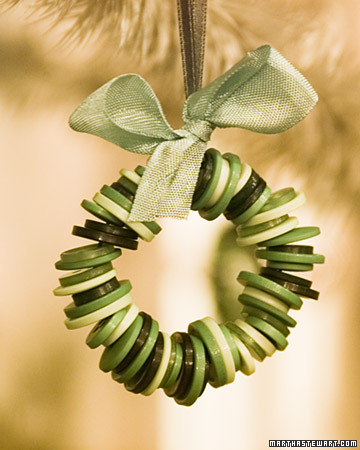
While searching the many ornament shops (with the other weirdos who don't find looking at Christmas paraphernalia in the middle of summer unnerving) I found many very cute ornaments that I could easily make with some felt, buttons, and other simple materials. So in addition to working on the vacation scrapbook, I will be making a trip to Michael's for some materials to make ornaments! Here are some of my favorites after googling online:
Tuesday, 29 June 2010
.Christmas in July.
It's been a while since I've blogged because Scott and I have been enjoying some downtime with family in VA and an extended honeymoon/vacation in South Carolina (pics will be posted soon). While on vacation we went to several different Christmas shops trying to find some eccentric ornaments. This Christmas will be our first together so we wanted to find a cute ornament for the occasion. After searching several different shops in the low country, we found a snowman ornament made out of the easily-recognizable sock monkey material (red & grey). As soon as I saw I knew that was what I wanted for our first ornament together!
Thursday, 10 June 2010
.another experiment: why do you write?.
I just finished writing a paper in my Lit. Theory class that questioned and explored the authorial intent of a collection of Holocaust poems called, I Never Saw Another Butterfly. The collection was written by young children imprisoned in the concentration camp of Terezin. A particular quote by Walter Benjamin, in his article, "Task of the Translator," sparked my interest in discussing this topic. His quote reads, "...in the appreciation of a work of art or an art form, consideration of the receiver never proves fruitful […] no poem is intended for the reader, no picture for the beholder, no symphony for the listener." I found this quote extremely problematic, especially as a writer.
In my paper, I discussed how, when reading the poems themselves and considering the circumstances in which they were created, a modern-day audience would think that the young children lived on the very idea that their poems would one day be read by others. However, because we were not present during the act of their writing, nor did we get the chance to question their authorial intent, we as a present-day post-Holocaust audience, will never have the authority to answer this question. Frustrating, huh?
Indeed, after writing this paper, I still cannot wrap my head around what Benjamin's quote means for writers. I can assume that, as a writer himself, he considered that his words would one day be read by a future audience (several of his articles and essays were published during his lifetime), and I understand that he is discussing the constraints that can come along with writing with a type of audience in mind; when we do not consider a particular audience, we can write free, unbridled meditations. Perhaps Emily Dickinson is a prime example of this notion. Although she gave her poems to others as gifts and her poems were read by others during her lifetime, she writes countless poems about the diminishing factor that publishing can cause for great art. Once such poem is called "Fame:"
Returning to Benjamin's quote, he too greatly emphasizes the "unfruitful" art that can arise when one does consider an audience.
It made me question why I, myself, write. I can say that having had this blog for a few months now, I write a little more deliberately, knowing that others will possibly stumble onto these words and read them. However, I have found that in having a place where I can freely publish my thoughts and words, my poetry-writing has decreased tremendously in the last few months (this could also be due to the fact that I've not had too many bouts with insomnia lately, which is when I usually write poems). This pattern could be unrelated to the presence of this blog, but it is certainly disheartening to myself as a poet. Perhaps, in order to write (and create "fruitful art," as Benjamin writes) we must first step away from the need to publish and write merely to write.
Now I know in the case of the children writing during the Holocaust, their reasons for writing were very different from mine and many present-day writers. All theories questioning the motivations behind writing during the Holocaust point to three basic reasons: writing as resistance, writing for survival, and writing to remember. These are all very probable reasons for why these young children were writing, along with the fact that their teacher, Friedl Dicker-Brandeis, gave them small assignments and art lessons in a small school-like setting of the camp. It's hard for me to believe that these children were only writing in response to assignments, however, because they depict the events occurring around them with such urgency and detail. But like I mentioned above, we can never know for sure to whom, or for whom, or with what intention they were writing.
So, this is a question for my fellow writers, poets, and bloggers (another experiment if you will)...why do you write? Do you consider any type of audience or do you have to step away from your knowledge that others will/can perhaps read your words?
In my paper, I discussed how, when reading the poems themselves and considering the circumstances in which they were created, a modern-day audience would think that the young children lived on the very idea that their poems would one day be read by others. However, because we were not present during the act of their writing, nor did we get the chance to question their authorial intent, we as a present-day post-Holocaust audience, will never have the authority to answer this question. Frustrating, huh?
Indeed, after writing this paper, I still cannot wrap my head around what Benjamin's quote means for writers. I can assume that, as a writer himself, he considered that his words would one day be read by a future audience (several of his articles and essays were published during his lifetime), and I understand that he is discussing the constraints that can come along with writing with a type of audience in mind; when we do not consider a particular audience, we can write free, unbridled meditations. Perhaps Emily Dickinson is a prime example of this notion. Although she gave her poems to others as gifts and her poems were read by others during her lifetime, she writes countless poems about the diminishing factor that publishing can cause for great art. Once such poem is called "Fame:"
Fame is a fickle food
Upon a shifting plate
Whose table once a
Guest but not
The second time is set
Whose crumbs the crows inspect
And with ironic caw
Flap past it to the
Farmer’s corn
Men eat of it and die.Returning to Benjamin's quote, he too greatly emphasizes the "unfruitful" art that can arise when one does consider an audience.
It made me question why I, myself, write. I can say that having had this blog for a few months now, I write a little more deliberately, knowing that others will possibly stumble onto these words and read them. However, I have found that in having a place where I can freely publish my thoughts and words, my poetry-writing has decreased tremendously in the last few months (this could also be due to the fact that I've not had too many bouts with insomnia lately, which is when I usually write poems). This pattern could be unrelated to the presence of this blog, but it is certainly disheartening to myself as a poet. Perhaps, in order to write (and create "fruitful art," as Benjamin writes) we must first step away from the need to publish and write merely to write.
Now I know in the case of the children writing during the Holocaust, their reasons for writing were very different from mine and many present-day writers. All theories questioning the motivations behind writing during the Holocaust point to three basic reasons: writing as resistance, writing for survival, and writing to remember. These are all very probable reasons for why these young children were writing, along with the fact that their teacher, Friedl Dicker-Brandeis, gave them small assignments and art lessons in a small school-like setting of the camp. It's hard for me to believe that these children were only writing in response to assignments, however, because they depict the events occurring around them with such urgency and detail. But like I mentioned above, we can never know for sure to whom, or for whom, or with what intention they were writing.
So, this is a question for my fellow writers, poets, and bloggers (another experiment if you will)...why do you write? Do you consider any type of audience or do you have to step away from your knowledge that others will/can perhaps read your words?
Saturday, 5 June 2010
.market-inspired salads.
Scott and I love eating salads...they're a light and delicious meal and you're able to sneak in vegetables amid the dressing, cheese and croutons. That being said, even though we eat them we don't eat different varieties of salads. Usually our salads will consist of Romaine lettuce, carrots, cheese, croutons, bacon bits, and whatever dressing we want that day (and we keep a large variety in the fridge at all times!).
However, after making a very successful trip to the farmer's market this weekend, we were able to venture into some different types of salads. The first salad contained fresh Romaine, spinach, and Lamb's lettuce, so we definitely had a variety of greens. Then I tossed in some large chunks of tomatoes, broccoli, some mushrooms, cheese, and Italian Vinaigrette dressing. This would have been a fine meal by itself along with some bruschetta, but we had also picked up some rabbit tenderloins (another adventurous move) and marinated them in some red strawberry wine. After they thawed we dipped them in an egg wash and brushed on some bread crumbs and salt & pepper. To top off this meal, we had some delicious sweet corn with it as well.
For dinner I was craving salad again so I put together our three greens, some chopped strawberries, mushrooms, shredded parmesan, crushed black pepper, and Caesar vinaigrette.
We are very glad to have found a farmer's market near us with a great variety of produce, meat, and bread! Here are some other recipes for salads that I hope to be trying soon: Recipes from AllRecipes.com
Tuesday, 1 June 2010
.how do you "see" characters? & the summer reading list.
A few weeks ago, one of my classmates in my Lit. Theory class posed a very interesting question that I thought I would share: How do you imagine/see characters in books? My other classmates answered several different ways; some said they saw the characters only as their name, not necessarily as a person (it was interesting that these students also had either contacts or glasses and did not have colorful dreams; they claimed that their dreams were either blurry or in black & white); others said they saw the characters fully detailed and colorful in their minds, imagining their clothes, their hair color, mannerisms etc. Still, others imagined a person they knew or imagined characteristics of their own, totally disregarding the author's details of the character.
Personally, I usually see the character as the author depicts him/her and view them this way throughout the novel whenever their name is mentioned. This becomes a problem, however, when I see a movie first (or movie preview as with "The Time Traveler's Wife"), then I usually can't get those characters' faces and mannerisms out of my head. I however, don't have glasses or contacts, and I dream in full color. So, I wonder if our imaginations have anything to do with our sight, or vice versa. It seemed to be a pattern that, at least in our Lit. Theory class, if a person does not have dreams in color or they are blurred, that person is more apt to see characters only as their names or in less details than those who are closer to 20/20 vision. This presents an interesting experiment!! Help me out here....how do you "see" characters when you are reading?
Now that my classes are winding down and all papers/exams will be due next week, I am making my summer reading list and here's what I've got so far:
(I'm currently reading "The Piano Teacher"by Janice Y.K. Lee - mostly while I bike at our gym)
"Hotel on the Corner of Bitter and Sweet" by Jamie Ford and "Unfinished Desires" by Gail Godwin
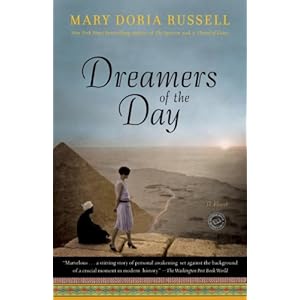
"The Postmistress" by Sarah Blake and "Dreamers of the Day" by Maria Doria Russell
"Imperfect Birds" by Anne Lamott and "Animal, Vegetable, Miracle" by Barbara Kingsolver
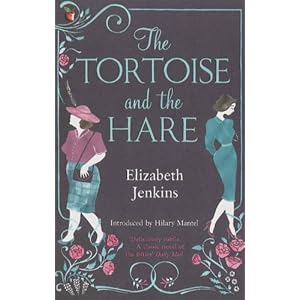
"The Tortoise and the Hare" by Elizabeth Jenkins and Fifth Avenue, 5 A.M.: Audrey Hepburn, Breakfast at Tiffany's, and the Dawn of the Modern Woman, by Sam Wasson
Let the summer reading begin!! : )
Subscribe to:
Posts (Atom)