One of the blogs I frequent is called WIT: Women in Theology, and it usually includes an array of posts about gender, feminism, Christianity, theology, etc. And since there are several women bloggers who contribute they tend to be interestingly different in subject matter and form. I'm a little behind on my reading but this morning one of the recent posts really caught my eye and I thought I'd share it here. It's a post discussing the contradictory rules for women and violence in the media, particularly looking at Rhianna's newest video, "Man Down,"portraying a girl who shoots her rapist.
To me, Rhianna is a particularly interesting artist because I always seem to keep her music on when I hear it on the radio (because the music is pretty good) but I can't stand how sexualized she allows herself to be (I'm particularly thinking of her performance of "What's My Name" on SNL; I wanted to scream: "stop gyrating already and just sing!). Even though I know many people - some feminists included - would argue that Rhianna perhaps chooses and is in control of the image she presents to the media and public, I think it can also be argued that she is buying into the over-sexualized female object, becoming a poster-child for the objectified woman. I let my students argue about this in my ENG 101 classes last fall and it was very interesting how quickly both the guys and gals agreed that it might not have been her choice to become a sex object, although now she's playing her part quite well.
What I found so compelling about the WIT post was that it discussed the implications of the song/video she duoed with Eminem, (don't get me started on him) "Love the Way You Lie," and how there is a contradictory "double-standard" for women and violence in the media (hence the title of the WIT post). While her rap duet with Eminem was clearly violent it was the man acting out his frustrated, passionate love, which is clearly okay since, as the WIT writer concludes, no one seems to have a problem with it. On the other hand, "Man Down" has received criticism because of its implications of "premeditated murder." Here's the double standard - - it's okay for men to be portrayed in a violent manner because they're just showing their obsessive love and affection, but it's bad for women to commit a violent act toward someone who has raped them (at least as far as this media argument goes).
In the same ENG 101 classes mentioned earlier I had my students watch "Love the Way You Lie,"(a video I'm sure many of them had seen already on VH1 or MTV) asking them to analyze and critically assess the messages portrayed through image and word. It was amazing to see college freshmen thinking critically about sexualized images of violence that I'm sure they had never considered before (and I'm really hoping they carried these considerations out into the world with them - specifically their dorms).
So for those of you (feminists included) who feel that Rhianna is just taking control of her body and liberating herself from "good girl" roles "gone bad," I have a real problem with Rhianna, but I do agree with the WIT blogger's comments that perhaps this time, at least in regards to her newest video, she might be getting a bad rap.
*[I didn't discuss the racial implications of the post which discussed the similar messages present in Rhianna's song and Martina McBride's "Independence Day" but that is definitely an interesting topic/problem to consider as well.]
Wednesday, 22 June 2011


Sunday, 19 June 2011
.The Kite Runner.
Thanks to two of my students from this spring quarter I moved Khaled Hosseini's The Kite Runner up on my summer reading list, and boy and am I glad I did! I know I'm a bit late in catching on to all the enthusiasm, popularity, and hype it received but it's better late than never, right? It's been sitting on my bookshelf for far too long because I just hadn't found the time to devote to it (I actually picked up my copy in a FREE BOOKS bin at Scott's school - can't beat that!) Truth is, it didn't take much time to read because I quite literally couldn't put it down and consumed it in just two days!
Needless to say I highly recommend it as a summer read (if you've not read it already, of course, and if you have I'd love to hear your thoughts on it). To me, it was so powerfully written because of the honesty of the narrator. He knew he had done wrong and he is quite unsympathetic for much of the narrative. I told my husband while we were reading together on the porch, "Gosh, I could just slap him," referring to the narrative, Amir. And I loved it, too, for the same reason one of my students expressed, "It's filled with wise quotes that stay with you long after you've put down the book." I couldn't have put it better myself!
The two students I referred to earlier are both originally from Afghanistan and were such joys to work with. During our one-on-one conferences I felt like I was talking to my peers, rather than students, because of their maturity and understanding of the world. In one part of the book the narrator says that he feels like a tourist in his own country, and both students mentioned this line as one that stuck out to them as Americans who have since travelled back to Afghanistan and Pakistan, experiencing a similar feeling. For me, it helped me understand the wars and controversies in the Middle East (if only a little better) because it made it a more personal story, one that affects fathers, sons, brothers, wives, daughters, husbands...

Add it to your reading list - you won't be dissatisfied! But a little word from experience: don't go watch the trailer because it gives a detail away that you'll want to read first. Although now that I've finished I can't wait to watch the film!
Needless to say I highly recommend it as a summer read (if you've not read it already, of course, and if you have I'd love to hear your thoughts on it). To me, it was so powerfully written because of the honesty of the narrator. He knew he had done wrong and he is quite unsympathetic for much of the narrative. I told my husband while we were reading together on the porch, "Gosh, I could just slap him," referring to the narrative, Amir. And I loved it, too, for the same reason one of my students expressed, "It's filled with wise quotes that stay with you long after you've put down the book." I couldn't have put it better myself!
The two students I referred to earlier are both originally from Afghanistan and were such joys to work with. During our one-on-one conferences I felt like I was talking to my peers, rather than students, because of their maturity and understanding of the world. In one part of the book the narrator says that he feels like a tourist in his own country, and both students mentioned this line as one that stuck out to them as Americans who have since travelled back to Afghanistan and Pakistan, experiencing a similar feeling. For me, it helped me understand the wars and controversies in the Middle East (if only a little better) because it made it a more personal story, one that affects fathers, sons, brothers, wives, daughters, husbands...

Add it to your reading list - you won't be dissatisfied! But a little word from experience: don't go watch the trailer because it gives a detail away that you'll want to read first. Although now that I've finished I can't wait to watch the film!
Thursday, 16 June 2011
.out in the sticks.
Today Scott and I ventured out to one of the Metro Parks to see Patrick Dougherty's "stickwork." Scott got the opportunity to meet Dougherty in April and hear him give a talk at the Dayton Art Institute. He bought his new book so I'd already seen a lot of his work. But it's nothing like seeing it in person. For more information or pictures of his work the New York Times had a very interesting article about his log cabin home in Chapel Hill, North Carolina. Here are some pictures from our excursion.


Saturday, 11 June 2011
.Visual Analysis.
One of the assignments for our ENG 101 students requires them to write a visual analysis. I was very excited to begin searching for some visuals for the service-learning class, centered around the African refugee experience/social work/interest. So here are just a few of the ones I found (I kind of got carried away and I have two whole pages of links, but I'll probably be weeding through some).
Brilliant friends and readers, please give some feedback/analysis of one (or more) of these visuals! I'd be interested in reading what you think about them.


Brilliant friends and readers, please give some feedback/analysis of one (or more) of these visuals! I'd be interested in reading what you think about them.

[People in Need ad]

[Keep a Child Alive - this one has already caused quite a bit of controversy]

[Advertisement for End Poverty 2015 campaign]

[Millennium Promise Organization]

[Care.org]
Thursday, 9 June 2011
.summer reading = fall course planning.
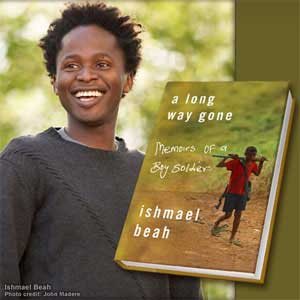
Even though my summer break could start any moment (if I would only finish grading that small pile of portfolios) I can't help thinking about the service-learning classes I'll be teaching in the fall. So I've been reading like a madwoman trying to find some good material for my students. Since the class will be mainly focusing on the African refugee situation I've begun reading Dave Eggers' What is the What and I think I've already found the excerpt I'll be sharing with my students. I also plan to assign a chapter from Long Way Gone by Ishmael Beah and Little Bee by Chris Cleeve (if you haven't read them I highly recommend both!)
My professor of the Writing and Social Activism class suggested two other books that I'll be checking out soon: Say You're One of Them? by Uwem Akpan and They Poured Fire on Us From the Sky: The True Story of the Lost Boys of Sudan by Benson Deng, Alephonsion Deng, and Benjamin Ajak. And The Lost Boys of Sudan documentary is currently sitting on the coffee table ready to be viewed. If you can't tell, I'm very excited about the course!


***
This weekend I watched The Stoning of Soraya M. and even though it wasn't necessarily "enjoyable" to watch it was very powerful; the women and their stories have stuck with me. I don't understand how we live in a world where this kind of violence still occurs and where women have no rights whatsoever. It's often easy to forget about these kinds of atrocities but they need to be in our reflections and prayers. I only first learned that stoning was still in practice in my Women's Studies class in undergrad - yes, not until I was 19 did I learn that women are still punished unjustly for crimes by stoning (before then I only knew about it from the Bible when Jesus says, "Let he who is without sin cast the first stone" (John 8:7) - it's not acceptable that our culture can turn such a blind eye to this issue. Female Genital Mutilation (FGM) is another issue I did not learn about until college, and I know that high school might not be the place for this kind of education, but young people - women especially - need to be aware of these occurrences around the world.
Wednesday, 1 June 2011
.Block Party for the Refugees.
Last night we had a block party for the African refugees we've been working with this quarter. It was held in their neighborhood and it was a huge success!


[Scott counting the jump ropers]


[There was lots of sidewalk chalk drawing hop-scotch, bubbles, and jump roping for the children and corn hole for the adults.]


[Gathering around the table]

[An interpreter aiding Jenny in talking to the women about the sewing circle she will be starting this summer. So exciting!]


[This is one of my students that I've often talked about in my posts]

[You apparently can't have a block party for African refugees without these African donuts. Several of the women made these sugary balls of deliciousness, and as you can see from the pic, they were gone pretty fast!]

[This guy made the goat kabobs and they were also delicious! He kept going around telling people they were almost ready and saying, "You will love them!" They were gone pretty quickly too]

[Enjoying goat kabobs with friends]

[Playing hopscotch]

[Dustin is one of the students in the class and he's standing with the refugee he worked with most of the semester]

[In her nice dress for the party!]

[One of the ladies who made the delicious donuts and Charlotte, one of the other students in my class]

[The man on the far left in the colorful jacket is Mugo and he is the leader of the tutoring program. Jenny and Charlotte are other students in my class who tutored and the man on the right was a student in our tutoring group; he's going to begin attending Wright State as part of the LEAP program this summer and he's very excited!]

It was such a great experience to be a part of Dr. Lamping's "Writing and Social Activism" class this spring. I've been truly blessed in getting to know the students and learning about social activism through grant-writing and service-learning. I'm excited to share these experiences with my students in the fall and continue working with these families, and new families who arrive. The party was also a great success thanks to the refugees who welcomed us into their neighborhood, sharing their food and music with us.
**thanks to Jenny P. for sharing some of her pictures!
**thanks to Jenny P. for sharing some of her pictures!
Sunday, 29 May 2011
.Exciting New Journeys.
This past week I received lots of good news so I thought I would share it here. First, this past winter I was part of a group of grad students researching "high risk" college students, trying to come up with ways to better integrate and prepare them for their freshman year in the hopes of improving the retention rate at our school. These "high risk" students are often defined by several factors: first-generation, low ACT/SAT scores, students with low GPA, and low-income. Over the course of a few months (which included lots of reading, researching, and wrestling with program ideas) we came up with what has now been called the "Wright State Academy." The Pilot of this program will begin in August and go for five weeks, ending in September. One of the other TAs and myself were given the positions as instructors for this program and I'm super excited about it! Not only will it be a fun, enriching experience, it's also going to look great on the resume!
Second, as you might have read in some of my recent posts, I've been working with a program downtown tutoring refugees from different parts of Africa. One morning, after sharing my experiences with my ENG 102 class, I decided I would try to incorporate it in my ENG 101 classes next quarter. I got the ball rolling by asking permission from our TA advisor and then setting up a meeting with the service-learning office at our school. Within a few hours (literally, I got emails back within moments) I started the planning process, trying to figure out the logistics of having freshmen tutoring refugees in English. I think it's going to be such a life-changing experience for these students (it certainly has been for me!) and I'm so excited to share it with them.
Needless to say, over the next couple of months I will probably be writing about my experiences, both of planning and undertaking both of these new journeys, and I know I have a lot more to read and learn about refugees and service-learning so I hope to share it here. Right now I've got a service-learning tutorial to attend in June and I'm excited about looking for reading material for my students since the whole class will be centered around the refugee experience. Already I've been considering A Long Way Gone by Ishmael Beah and What Is the What by Dave Eggars.


Second, as you might have read in some of my recent posts, I've been working with a program downtown tutoring refugees from different parts of Africa. One morning, after sharing my experiences with my ENG 102 class, I decided I would try to incorporate it in my ENG 101 classes next quarter. I got the ball rolling by asking permission from our TA advisor and then setting up a meeting with the service-learning office at our school. Within a few hours (literally, I got emails back within moments) I started the planning process, trying to figure out the logistics of having freshmen tutoring refugees in English. I think it's going to be such a life-changing experience for these students (it certainly has been for me!) and I'm so excited to share it with them.
Needless to say, over the next couple of months I will probably be writing about my experiences, both of planning and undertaking both of these new journeys, and I know I have a lot more to read and learn about refugees and service-learning so I hope to share it here. Right now I've got a service-learning tutorial to attend in June and I'm excited about looking for reading material for my students since the whole class will be centered around the refugee experience. Already I've been considering A Long Way Gone by Ishmael Beah and What Is the What by Dave Eggars.

In other news, I'm really going to miss my ENG 102 students once this quarter is over (which is in another week) but I'm very excited about summer break. They've definitely been a breath of fresh air after the uninterested, unmotivated class I had last quarter and I've enjoyed getting to know them and read their argument papers. I had them write me (Dear "Mrs. M.") letters again and we all seemed to enjoy it! And for their argument papers they definitely chose topics they were passionate about and engaged in. This past week I had them present 3-5 minute Creative Argument Projects (CAPs) on their chosen topics and they've done some fabulous work using Prezi, MovieMaker, and PowerPoint.
Also, this coming week for our last meeting of the Writing and Social Activism class we're throwing a block party for the African refugees in their neighborhood. I talked about it a little bit in a previous post, and I can't believe it's here already. I'll definitely share pictures and a follow-up. Oh, and I'll let you know what goat tastes like...should be interesting!
Monday, 16 May 2011
.spelling "Jesus" and meeting the women.
Last week at the African refugee tutoring I walked in to find "R" waiting for me and was greeted with, "you're late!" We quickly sat down and I got the Scrabble flashcards I brought. But first we had to sort through some stuff for his job and it seems I will be making a trip with him to the bank sometime soon to make sure they're putting all his paycheck in the right place; he said the man told him the bank might have to take a fee out - why can't people just be honest?
"R" is still learning his letters and even though he can carry on a conversation in English really well he cannot read words and cannot correctly indicate certain letters. We listed the alphabet with the cards and then went over their sounds and started making words. The first word he wanted to know was "cute" - he said some of the girls at work were calling him "cute" and he wanted to know the difference in comparison to "beautiful." The next word he spelled was "love," and then he wanted to know how to spell, "Jesus."
I have to say it made me a little nervous when we started spelling it out because our professor has stressed that we're not there to "convert" them, so I didn't want her to think I was stepping out of bounds as far as the rules went for our class. Later I felt pretty silly for having a second thought about spelling it with him; he was the one who asked. In another post I talked about him asking to go to church; we tried to take him this week, but he called early Sunday morning and said his boss called him in to work. He had called five times on Saturday wanting to set up the plans for coming to church with us; I hope it will work out soon. He seems very eager! I will ask him what kind of church he would like to go to and he replies, "Any church! Any church!"
After the tutoring, he and two other students packed into my little VW Bug and we drove to their neighborhood a few blocks away (they walk to the center because most of them do not drive). Some of the other women from our class had taken several other students home so we all arrived in the neighborhood together and met Mugo, the leader of the tutoring program. We're planning on having a block party for the neighborhood before the quarter is over and so we walked around meeting the women (usually only the men attend the tutoring because the women stay home and cook and take care of the children). We went to the front door of all the houses and were met by smiling faces, women inviting us into their humble homes (and I mean humble - one house had a hole in the roof and it still puzzles me that there were people living in it - others had up to 11 people residing in them). They had us sit on their mismatched furniture and we asked them what kind of food they liked and would want for the party. Most of them said they liked goat, chicken, rice, kasava leaves and fruit.
Many of the women sat out on their porches together enjoying the warm weather and others were hoeing the garden in one of the vacant lots. They wore t-shirts or tank tops and brightly-colored wraps as skirts, and some wore head wrappings. The women seem less "Americanized" than the men, and it's probably because they're not out in the public as much; they stay home with the children and do not go out to work. However, some of them do have jobs as cleaning ladies so perhaps they just choose to keep the traditional dress more so than the men. But everyone wore a welcoming, warm smile and we left them with friendly waves (most of them could not speak very much English so Mugo did most of the talking/translating, but a smile need not be translated!). I felt like we had made new friends that we would be seeing again in a couple more weeks. We plan to bring the food to them a couple days before the party and they will fix it (this may seem odd that we're hosting the party and they're cooking the food, but Mugo said they wouldn't have it any other way).
I'm very excited because Scott will be accompanying me this week and helping tutor the children since he's finished with school for the summer. I cannot thank God enough for sending us this wonderful opportunity and to have these people be a part of our lives.
Tuesday, 10 May 2011
.The Boy in the Moon: A Father's Search for His Disabled Son.
Today as I was driving to school, listening to NPR, they were interviewing Ian Brown, author of the memoir The Boy in the Moon about his now fifteen-year-old son, Walker, who has an extremely rare genetic mutation called cardiofaciocutaneous syndrome (CFC). There are thought to be only a little over a hundred people around the world who have this disease.

As he was describing the mutation and the rituals they had to undergo when Walker was living with them (he now lives in a home with other children) I was eager to read more. Brown particularly questions, and struggles with the question, of what these children (most who cannot speak/understand language, eat whole food, or be potty-trained) give to society; how do they benefit from living? This not only comes down to a money question since it obviously takes a great deal to keep them institutionalized; it also comes down to what are these people getting out of life other than pain and suffering? Brown asserts that his son does have days of crying, but also days of laughter. And he described his favorite picture of his son lying with his sister, Hayley as she read a Dr. Seuss book to him aloud. Though he can't understand, Brown said that Walker enjoyed the rhythm of the story and the attention his sister was obviously giving him; he was experiencing joy from something so simple, something many of us would take from granted. In this way, Brown says these children and adults have plenty to teach us!
Likewise, he acknowledged the argument that these children and adults will be unable to contribute or become part of the larger society. He asserted that they have their own societies/communities that we have to be allowed into rather than the reverse. Though they cannot speak/understand language, it seemed from his interview they can communicate somewhat, specifically with each other. I was amazed when he told about his wife and daughter dropping off Walker at his school after having taken him home for a few days. He described his son seeing two girls he had become friends with and pushing his mother and sister out the door, as if to say (in Brown's words), "Get the hell out of here, I've got things to do!"
I really recommend checking out this moving story. You can read a four-page excerpt here, and listen to the interview here.

As he was describing the mutation and the rituals they had to undergo when Walker was living with them (he now lives in a home with other children) I was eager to read more. Brown particularly questions, and struggles with the question, of what these children (most who cannot speak/understand language, eat whole food, or be potty-trained) give to society; how do they benefit from living? This not only comes down to a money question since it obviously takes a great deal to keep them institutionalized; it also comes down to what are these people getting out of life other than pain and suffering? Brown asserts that his son does have days of crying, but also days of laughter. And he described his favorite picture of his son lying with his sister, Hayley as she read a Dr. Seuss book to him aloud. Though he can't understand, Brown said that Walker enjoyed the rhythm of the story and the attention his sister was obviously giving him; he was experiencing joy from something so simple, something many of us would take from granted. In this way, Brown says these children and adults have plenty to teach us!
Likewise, he acknowledged the argument that these children and adults will be unable to contribute or become part of the larger society. He asserted that they have their own societies/communities that we have to be allowed into rather than the reverse. Though they cannot speak/understand language, it seemed from his interview they can communicate somewhat, specifically with each other. I was amazed when he told about his wife and daughter dropping off Walker at his school after having taken him home for a few days. He described his son seeing two girls he had become friends with and pushing his mother and sister out the door, as if to say (in Brown's words), "Get the hell out of here, I've got things to do!"
I really recommend checking out this moving story. You can read a four-page excerpt here, and listen to the interview here.
Thursday, 5 May 2011
.Who's teaching whom?.
This past week during our weekly "visit/tutoring/growth into better adults," whatever you might want to call it, during our hour of tutoring African refugees, I worked for the second time with a 29-year-old man from Congo who only has one arm (a soldier came into his home and shot him when he was 19). The last time I worked with him he seemed very distracted and a little frustrated, but I felt much better about our second week together. What always amazes me about these weekly classes is that as soon as the students walk in, they look for the person they worked with last, so as soon as R walked in the cafeteria he saw me, walked over, greeted me, and begin taking down the chairs for us to work at our table (we've started fist-bumping since he seems not to enjoy hand-shaking, which I like almost more!).
We sat down at a table together and I could tell he was a little worried about something. It turned out that he had missed work because he was confused about his schedule. I ensured him that I was sure it would be fine if he just called the place where he works and apologize. It didn't seem to help much, but we started the night's lesson, which happened to be how to use a phone book. I'm always amazed at how different things might seem to those who've only been here in "the good 'ol U.S. of A" for short periods of time. A phone book is something we know from children - we know how to look up the restaurants, doctors' offices, toy stores, and yet this was something he clearly was not comfortable with. After browsing several categories that would probably never come in handy his phone rang and he proceeded to talk to someone, courteously excusing himself from this "life skill" lesson I was trying to teach. Before I knew it the phone had been placed near my ear and I was talking to his boss who was hurriedly rambling out his hours for the next two weeks. I quickly jotted them down and told her that he had promised to try harder in keeping up with his hours. (But honestly, the way she was mumbling the days and times so fast I don't see how he, as an ESL speaker, could understand when I was struggling to keep up!) I don't blame him one bit!
When I gave his phone back I quickly drew boxes with the days of the week, trying desperately to draw something that looked remotely like a calendar. He immediately turned it around to face him and said, "I like this!" Aha! Something I could really teach him, how to keep a planner! If that's not a "life skill," what is? So I told him how he could mark his hours under the boxes with the days labeled at the top and even mark them off when he was done (ugh! so American - mark off the days so you'll feel like you've accomplished something).
The rest of the time was spent going over traffic signs (because he really wants to get his drivers' license) and making family trees together. I started finding that if I didn't talk, he would just keep right on talking, telling me about his family, his life in the Congo vs. here (he loves America and American food especially) so I let him talk. He told me about one of the biggest differences he saw between America and the Congo:"Here, war is soldier and soldier, there they come in at homes...they could come in here" and he gestured to the door. I shuddered. He told me how when he was 19 years old a soldier came in his home and shot him and his father - his father didn't survive. And as if that wasn't enough, it nearly broke my heart when he said, "English is hard. I need English friends." He said everyone he's around speaks in another language and his mother wants to speak their language from Africa when they're home. Then, something amazing happened...
He leaned over and asked, "Do you go to church? Man, I need to go t'church." Technically, we're not supposed to talk about it with them - we've been warned several times not to try and "convert" them, but I was comforted knowing he was the one who asked. I told him my husband and I do in fact go to church but that it was pretty far away from where he and his mother live. So I told him we could come pick him up and take him to a church downtown on Saturday evening since he works on Sundays. I just couldn't believe how serendipitous this all was. Before he left he urged me to write down his cell number so I could call and take him to church. I hope it all works out that we can take him, but either way, I learned so much about him and myself in that hour working with him.
I've been thinking lately how God miraculously places things in our paths so we can be prepared for them later. I read a book when I was in college, thanks to my mother, called Left to Tell: Discovering God Amidst the Rwandan Holocaust about the genocide in Rwanda, and now I'm working with these refugees who have seen and experienced things like Immaculee, and I honestly don't know if I would have known how to approach this situation, or at least I might not have felt as connected, if I hadn't read about her experience with war coming into her home and neighbors rising up against one another. I just feel so blessed that these students are a part of my life.
And yet another blessing that I found out today: one of the other students we've been working with went in for a meeting today at our school and got a position in the LEAP program, designed for non-English speakers to take college classes and learn English along the way. We got an email from our professor saying he was overjoyed and that he kept saying he wouldn't have this opportunity if not for this class.
"Blessed are the poor in spirt, for theirs is the kingdom of heaven...Blessed are the meek, for they shall inherit the earth...Blessed are the pure in spirit, for they shall see God..."
We sat down at a table together and I could tell he was a little worried about something. It turned out that he had missed work because he was confused about his schedule. I ensured him that I was sure it would be fine if he just called the place where he works and apologize. It didn't seem to help much, but we started the night's lesson, which happened to be how to use a phone book. I'm always amazed at how different things might seem to those who've only been here in "the good 'ol U.S. of A" for short periods of time. A phone book is something we know from children - we know how to look up the restaurants, doctors' offices, toy stores, and yet this was something he clearly was not comfortable with. After browsing several categories that would probably never come in handy his phone rang and he proceeded to talk to someone, courteously excusing himself from this "life skill" lesson I was trying to teach. Before I knew it the phone had been placed near my ear and I was talking to his boss who was hurriedly rambling out his hours for the next two weeks. I quickly jotted them down and told her that he had promised to try harder in keeping up with his hours. (But honestly, the way she was mumbling the days and times so fast I don't see how he, as an ESL speaker, could understand when I was struggling to keep up!) I don't blame him one bit!
When I gave his phone back I quickly drew boxes with the days of the week, trying desperately to draw something that looked remotely like a calendar. He immediately turned it around to face him and said, "I like this!" Aha! Something I could really teach him, how to keep a planner! If that's not a "life skill," what is? So I told him how he could mark his hours under the boxes with the days labeled at the top and even mark them off when he was done (ugh! so American - mark off the days so you'll feel like you've accomplished something).
The rest of the time was spent going over traffic signs (because he really wants to get his drivers' license) and making family trees together. I started finding that if I didn't talk, he would just keep right on talking, telling me about his family, his life in the Congo vs. here (he loves America and American food especially) so I let him talk. He told me about one of the biggest differences he saw between America and the Congo:"Here, war is soldier and soldier, there they come in at homes...they could come in here" and he gestured to the door. I shuddered. He told me how when he was 19 years old a soldier came in his home and shot him and his father - his father didn't survive. And as if that wasn't enough, it nearly broke my heart when he said, "English is hard. I need English friends." He said everyone he's around speaks in another language and his mother wants to speak their language from Africa when they're home. Then, something amazing happened...
He leaned over and asked, "Do you go to church? Man, I need to go t'church." Technically, we're not supposed to talk about it with them - we've been warned several times not to try and "convert" them, but I was comforted knowing he was the one who asked. I told him my husband and I do in fact go to church but that it was pretty far away from where he and his mother live. So I told him we could come pick him up and take him to a church downtown on Saturday evening since he works on Sundays. I just couldn't believe how serendipitous this all was. Before he left he urged me to write down his cell number so I could call and take him to church. I hope it all works out that we can take him, but either way, I learned so much about him and myself in that hour working with him.
I've been thinking lately how God miraculously places things in our paths so we can be prepared for them later. I read a book when I was in college, thanks to my mother, called Left to Tell: Discovering God Amidst the Rwandan Holocaust about the genocide in Rwanda, and now I'm working with these refugees who have seen and experienced things like Immaculee, and I honestly don't know if I would have known how to approach this situation, or at least I might not have felt as connected, if I hadn't read about her experience with war coming into her home and neighbors rising up against one another. I just feel so blessed that these students are a part of my life.
And yet another blessing that I found out today: one of the other students we've been working with went in for a meeting today at our school and got a position in the LEAP program, designed for non-English speakers to take college classes and learn English along the way. We got an email from our professor saying he was overjoyed and that he kept saying he wouldn't have this opportunity if not for this class.
"Blessed are the poor in spirt, for theirs is the kingdom of heaven...Blessed are the meek, for they shall inherit the earth...Blessed are the pure in spirit, for they shall see God..."
Saturday, 23 April 2011
.Pilgrimage to see Jane Eyre.
This Friday, I and several of my classmates from our Bronte's class ventured to the Neon theater downtown for a viewing of the new film Jane Eyre. We had all just finished reading the book for class (some of us for the second, third, or more times) so there were several scenes not included that we definitely missed, but altogether it was a lovely movie. The acting, musical score, costumes, and cinematography were all fabulous. For me, the music added so much to the narrative - the string-driven songs reminded me of the score from The Village, which I also love - and I've been listening to the excerpts on iTunes, reliving scenes in my mind. I've had photos from the film hanging in my office at school since Scott brought them home in The New York Times review of the film, so I thought I'd share some of them, and several more, here.


{Mia Wasikowska is a superb Jane and I love this somber picture of her in her cape}

{Likewise, Judi Dench is a great Mrs. Fairfax - they did a fabulous job with casting of this film!}
{Similar to the book, I had to warm to Mr. Rochester but he steals your heart at all the right times - corny, I know, but it's so true!}


{This scene is amazing!!}


(From a response for class): In Jeffrey Sconce’s article, “The Cinematic Reconstruction of Jane Eyre,” he discusses the complexities of adapting Bronte’s work to a cinematic medium. He writes, “Bringing Jane Eyre before the cameras in the early Forties required a reading that captured the novel’s importance and identity for a contemporary audience through a narrative form familiar to them, a task perhaps better executed by a Hollywood producer than by a devoted Brontephile” (517). I found this quote particularly interesting in regards to the most recent adaptation of Jane Eyre, particularly in considering the scenes and articulations not included in the film. For Sconce, at least, the logic lies in the “contemporary audience” as reason for why these particular scenes were omitted. As we’ve already briefly mentioned in class, there were several key scenes not included in the newest adaptation, including the infamous “gypsy” scene, the ending “conclusion” with Jane and Rochester as a family, and Miss Temple is almost (if not fully) non-existent. In keeping with Sconce’s notion that these omissions can be blamed on the viewing “contemporary audience,” why would these particular scenes be the first to omit for our own contemporary viewers?
Secondly, I enjoyed the opening of Donna Marie Nudd’s article, “The Pleasure of Intersexuality: Reading Jane Eyre Television and Film Adaptations,” when she writes, “Virtually every informed audience member or reviewer will discuss whether the adaptation he or she is viewing is ‘faithful.’ But the inevitable question arises: ‘Faithful to what?’ Is Bronte’s three-volume Victorian novel a romance? a melodrama? a gothic mystery? a Christian morality tale? a feminist classic? a fictionalized autobiography?” (523). Again, this question was particularly interesting in regards to the new Jane Eyre because the previews presented it as a “gothic mystery” (or at least that’s what I expected when watching the trailers). So, again, considering Sconce’s “contemporary audience,” could this emphasis on the gothic elements be partly blamed on the current fascination with vampires, gothic fairy tales, and dark romance?
Sunday, 10 April 2011
.Reflections on Week 2.
Week two with the refugees went really well in our intimate gathering of C group students (most advanced). We started the night with five students, and ended with four, losing one to another group for some remedial instruction on reading. First, we had them go around and say their names and where they were from using a piece of string that connected each of us in a united web. The string was a bit unruly when we were passing it around, but it actually seemed to help us all become more comfortable with each other, and there were smiles and laughs all around.

We then had them write short paragraphs about themselves and their goals. One that really struck me was the man that I later got to work with who said he wanted to get his degree, sustain a job, and get married and have three beautiful babies. They all willingly shared their goals with each other and were excited about hearing our goals as well. I was really struck by this especially, because I think they enjoyed the fact that we were taking part in writing with them and stating our life goals. I didn’t expect them to ask to hear ours but they seemed very eager for us to participate as well. From what I’ve already learned about these students, I was not surprised to find that each one of them placed a great deal of emphasis on their goal to continue their education, get degrees, and better their English.
After we all wrote and shared our short paragraphs we had them do a noun tense fill-in-the-blank sheet that they completed with little trouble. They went around and gave their answers orally, and when they all seemed to be getting them correct, we quickly realized they were advanced even more than we thought; we’ll have to bring more challenging exercises for some of them. We also learned through this exercise that some of them are much better when reading and writing, but are much more shy and apprehensive when speaking. That they are so advanced in either areas truly impresses me and I commend them for their efforts in learning the new language.
After we went over the noun tense sheet, we split up and did some one-on-one teaching, and this was by far my favorite part. I think that it would be best if we could continue breaking the class up in this way – having the first half devoted to learning as a group and then giving one-on-one attention to each student for the remainder of the time. I was very impressed with the man I worked with, because not only could he read, write, and speak really well, he also knew quite a bit about grammar rules. We went over nearly two pages of the college entrance exam for English together and he got almost all of them correct, even pointing out independent and dependent clauses. I was disappointed, however, to find that because of his work schedule he will be unable to attend our classes each week. He told me he had already taken the GED and had only missed 10 over the limit for the reading section. This really saddened me that he had gotten this far and done so well, only to learn that he did not pass. Likewise, I knew by then that he would not be able to come and work with us, so I’m hoping we can send along some exercises for him to work on. Also, my two students from last week were not able to come so I’m hoping they will be attendance next week.
Already I’ve learned so much about their cultures and I’ve been touched by their enthusiasm and joy. Even though, as we’ve been reading in Little Bee, they may have come from violent and awful situations, they smile, laugh, and tell their stories to us, excited and eager to be learning and sharing with one another.
One image that has really stayed with me this week is when we left the cafeteria where we teach – we were met by dozens of families leaving the gymnasium where some kind of basketball league was ending for the night. I watched the contrasting faces leaving the building – the African refugees excited about the new English words they had learned and can now take out with them into their workplaces and the white middle-class families toiling over the wins and loses of a youth basketball game. It really occurred to me, as it sometimes does, that in America we have very flawed perspectives and priorities. We all left the building together, but some of us would be carrying many more privileges with us, while others would be struggling and striving to make each moment and opportunity count.

We then had them write short paragraphs about themselves and their goals. One that really struck me was the man that I later got to work with who said he wanted to get his degree, sustain a job, and get married and have three beautiful babies. They all willingly shared their goals with each other and were excited about hearing our goals as well. I was really struck by this especially, because I think they enjoyed the fact that we were taking part in writing with them and stating our life goals. I didn’t expect them to ask to hear ours but they seemed very eager for us to participate as well. From what I’ve already learned about these students, I was not surprised to find that each one of them placed a great deal of emphasis on their goal to continue their education, get degrees, and better their English.
After we all wrote and shared our short paragraphs we had them do a noun tense fill-in-the-blank sheet that they completed with little trouble. They went around and gave their answers orally, and when they all seemed to be getting them correct, we quickly realized they were advanced even more than we thought; we’ll have to bring more challenging exercises for some of them. We also learned through this exercise that some of them are much better when reading and writing, but are much more shy and apprehensive when speaking. That they are so advanced in either areas truly impresses me and I commend them for their efforts in learning the new language.
After we went over the noun tense sheet, we split up and did some one-on-one teaching, and this was by far my favorite part. I think that it would be best if we could continue breaking the class up in this way – having the first half devoted to learning as a group and then giving one-on-one attention to each student for the remainder of the time. I was very impressed with the man I worked with, because not only could he read, write, and speak really well, he also knew quite a bit about grammar rules. We went over nearly two pages of the college entrance exam for English together and he got almost all of them correct, even pointing out independent and dependent clauses. I was disappointed, however, to find that because of his work schedule he will be unable to attend our classes each week. He told me he had already taken the GED and had only missed 10 over the limit for the reading section. This really saddened me that he had gotten this far and done so well, only to learn that he did not pass. Likewise, I knew by then that he would not be able to come and work with us, so I’m hoping we can send along some exercises for him to work on. Also, my two students from last week were not able to come so I’m hoping they will be attendance next week.
Already I’ve learned so much about their cultures and I’ve been touched by their enthusiasm and joy. Even though, as we’ve been reading in Little Bee, they may have come from violent and awful situations, they smile, laugh, and tell their stories to us, excited and eager to be learning and sharing with one another.
One image that has really stayed with me this week is when we left the cafeteria where we teach – we were met by dozens of families leaving the gymnasium where some kind of basketball league was ending for the night. I watched the contrasting faces leaving the building – the African refugees excited about the new English words they had learned and can now take out with them into their workplaces and the white middle-class families toiling over the wins and loses of a youth basketball game. It really occurred to me, as it sometimes does, that in America we have very flawed perspectives and priorities. We all left the building together, but some of us would be carrying many more privileges with us, while others would be struggling and striving to make each moment and opportunity count.
Friday, 8 April 2011
.boxes of soap.
Today I presented one of my papers at the graduate symposium at my school and one of the other presenters talked about his entrepreneurial endeavors of developing his own soap company called "Society Bodycare." As a graphic designer, he makes his own vegan soaps, and sells the uniquely packaged bars, which are wrapped in old pages from books, donating a bar for each one sold (similar to Toms shoes "one for one" campaign) to local non-profits.
 I got two samples today and they have uniquely refreshing scents, and each one has a story! Just thought I would share it and urge you to check out his website and purchase a bar of soap for yourself (while providing someone else with a daily necessity).

Saturday, 2 April 2011
.Spring Quarter...though the weather suggests otherwise.
I'm getting ready to start week 2 of the spring quarter and I have to say this might be the best one yet! I really like the ENG 102 class and all my students, and I had no doubt that I would enjoy "The Brontes" and "Writing and Social Activism." Since I haven't updated in a bit I thought I would reflect about our first meeting of the Social Activism class where we pre-tested the English of about two dozen African refugees. We'll be working with them the rest of the quarter, teaching them English, and writing a grant proposal for the program we are working with.
I first read the Writing and Social Activism emails over spring break, visiting my family, and I couldn’t wait to run downstairs and inform them of what I was going to be doing in the class; I had heard rumors that we would be meeting downtown somewhere and working with people writing grants, but I had no particulars until getting the emails about the African refugees. At first reading, I was nervous but that emotion was instantly pushed aside by excitement, curiosity, and an eagerness to get started. Upon arriving at the center where we would be pre-testing the English of these refugees I was again filled with nervous excitement, but it soon faded when I sat down with my first student, A* (age 52). A’s smiling and welcoming face guided me through the testing process – rather than the other way around. He told me about his three children, who all share his name as their middle name, and about his love for education. Ultimately, he wants to attend school and get a job, and his eagerness to learn humbled me as a fortunate grad student with the privilege of attending school everyday.
My second student was J (age 26) who seemed quite nervous talking to me at first, but soon eased (even to the point of sitting with me until the rest of the time was up). She came from Ghiana and has a three-year-old little girl who she says calls her “Mum,” because she learned British English in a daycare before coming to America. She said she laughs and tells her, “No, we’re in America now. You have to call me ‘mama.’” She, too, is very eager to learn and be in school again – she did attend college for a while, but now lives here cleaning during the day.
I was quite impressed with the speaking, reading, and listening abilities of my students; their English, in my opinion, seemed pretty advanced. I tried to put myself in their shoes and thought if I’d only been in America for a few months I would not have been as comfortable conversing in English as they seem to be. All in all, it was a wonderful experience and I look forward to seeing and working with both of them over the course of this quarter, as well as meeting the other students. *I won't share their names here
Also, one of the texts we are reading for the class is Chris Cleave's NYTimes Bestseller, Little Bee. I've only read half of it so far, but I suggest putting it on your reading list!

I first read the Writing and Social Activism emails over spring break, visiting my family, and I couldn’t wait to run downstairs and inform them of what I was going to be doing in the class; I had heard rumors that we would be meeting downtown somewhere and working with people writing grants, but I had no particulars until getting the emails about the African refugees. At first reading, I was nervous but that emotion was instantly pushed aside by excitement, curiosity, and an eagerness to get started. Upon arriving at the center where we would be pre-testing the English of these refugees I was again filled with nervous excitement, but it soon faded when I sat down with my first student, A* (age 52). A’s smiling and welcoming face guided me through the testing process – rather than the other way around. He told me about his three children, who all share his name as their middle name, and about his love for education. Ultimately, he wants to attend school and get a job, and his eagerness to learn humbled me as a fortunate grad student with the privilege of attending school everyday.
My second student was J (age 26) who seemed quite nervous talking to me at first, but soon eased (even to the point of sitting with me until the rest of the time was up). She came from Ghiana and has a three-year-old little girl who she says calls her “Mum,” because she learned British English in a daycare before coming to America. She said she laughs and tells her, “No, we’re in America now. You have to call me ‘mama.’” She, too, is very eager to learn and be in school again – she did attend college for a while, but now lives here cleaning during the day.
I was quite impressed with the speaking, reading, and listening abilities of my students; their English, in my opinion, seemed pretty advanced. I tried to put myself in their shoes and thought if I’d only been in America for a few months I would not have been as comfortable conversing in English as they seem to be. All in all, it was a wonderful experience and I look forward to seeing and working with both of them over the course of this quarter, as well as meeting the other students. *I won't share their names here
Also, one of the texts we are reading for the class is Chris Cleave's NYTimes Bestseller, Little Bee. I've only read half of it so far, but I suggest putting it on your reading list!

Sunday, 13 March 2011
.Appalachian Studies Conference.
This weekend Scott and I traveled to Richmond, Kentucky for the 34th Annual Appalachian Studies Association Conference at Eastern Kentucky University! I have to say my favorite part was being around "folks" from the mountains, hearing the familiar accent, and meeting people from our neck of the woods in Southwest Virginia. Some of the sessions I attended were:
One particular item Scott and I are both quite excited about is a poster we bought from the Beehive Design Collective, a "swarm" of artists and activists working to translate the stories of environmental destruction from "word-to-image." We plan to get it framed and hang it over our couch. Here are some examples of their art and you can see more at their website!


- Appalachian Women's Work - Perceptions of Breastfeeding Among First-Time Mothers in Appalachia; Eastern Kentucky Women Artists Working for Social Change; Appalachian Women Take It on the Road.
- Service Learning: Action, Reflection, and Renewal in the Academy through Student Engagement in the Community - Shepherd University, West Virginia (this one was extremely helpful in what I'm currently interested in with high-risk college students)
- Readings by Southern Appalachian Writers' Cooperative
- Sexing Up Statistics With Song and Story (Serendipitously I got to help out with this one since it was being presented by my theater director from my undergrad and he was talking about a play I performed with him)
- Appalachian, Ethnicity, and Gender: An Exploratory Look at Higher Education Learning
One particular item Scott and I are both quite excited about is a poster we bought from the Beehive Design Collective, a "swarm" of artists and activists working to translate the stories of environmental destruction from "word-to-image." We plan to get it framed and hang it over our couch. Here are some examples of their art and you can see more at their website!


Subscribe to:
Posts (Atom)