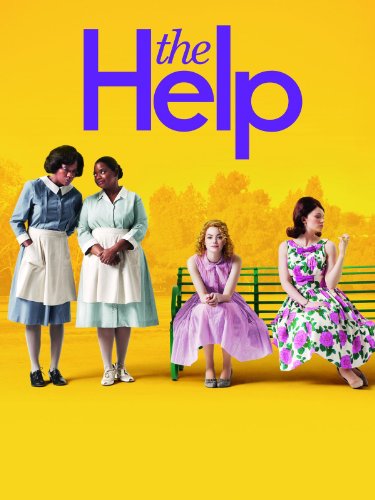
Viola Davis, who played Aibileen in the film, has received backlash about her role, accused of 'selling out' and that she was surprisingly 'reduced to playing a maid in 2011.' Davis, in an interview with NPR, argued that she did not see herself being 'reduced' in this way or made into a stereotype. Instead, Davis said, "I saw [Aibileen] going on a journey. I saw her having humor and heart and intelligence. I saw her as having duality. And that's what I look for above anything else. Because usually, that is what's missing."

After viewing Melissa Harris-Perry's discussion of the film on her new show on MSNBC, I am beginning to understand the political/social problems within The Help - -

Source: google.com via Jade on Pinterest
Perhaps what helped me to respect Harris-Perry's segment most is that one of her guests was Barbara Young, an organizer of National Domestic Workers Alliance who spoke on behalf of contemporary domestic workers. Perhaps her opinion, and the black domestics she represented, was what I was waiting to hear all along; I wanted to hear what real domestics had to say about the film's representation. She had both positive and negative opinions to share: (Positives) - she suggested that people who might not be interested in the Civil Rights Movement will be able to view some of these events and issues in the film; she was also touched by the relationship it presented between the domestics and the children they kept. (Negatives) - she agreed that there were numerous historical inaccuracies; and that the women's voices were being 'given to them' by a young, educated white woman, both problematic issues.
Having read the book several months before the movie came out, I didn't originally see Skeeter as 'giving voice' to the women because the book tells the story from different views, alternating between the characters Aibileen, Skeeter, and Minny; however, the book is itself written by a white woman. For me, I was able to appreciate the gender issues it presented: white women emphasizing child-bearing and home-keeping rather than education and independence as well as domestic violence against women. As a Women's Studies student I was glad that it presented these issues for audiences who might not normally consider them, even if they were 'sugar-coated' a bit (for example: we don't see Minny's husband beat her, we only see the aftermath; Skeeter is independent and unmarried at the end of the film, but not in the book - I'm still not sure why they chose to do this).
The guests on Harris-Perry's show point to a similar problematic example in the film when Yule May, a college-educated black domestic, is accused of stealing and beaten by white police officers. Only a few scenes later she is shown comfortably healed and happy in her prison community of women - not realistic! Again, this was something I overlooked in my first viewing of the film, but noted after Harris-Perry's segment.
As I continue to synthesize these issues and opinions, I have a better understanding why people have criticized the film so much for its treatment of race issues. I'm not sure that I'll be tossing out my film or book and I'll still recommend that people read and watch The Help. In addition, I've taken heed to Barbara Young's advice. She suggests that if viewers enjoy the film, they should try supporting the domestic workers in their communities, helping them pass legislature to improve working conditions.
To learn more, watch Melissa Harris-Perry's segment on The Help!
...any thoughts??