A few posts ago, I discussed the digitalization of texts and my opinion of them in relation to the printed word. While browsing the pages of NPR, I came across a very interesting article about William Powers' book, Hamlet's Blackberry: To Surf of Not to Surf: A Practical Philosophy for Building a Good Life in the Digital Age. The idea to write about this particular subject came to him as he was standing on a street corner in Manhattan. Looking around he found more than five people staring down into some kind of electronic device, trying desperately to stay connected to the world, while ironically becoming quite disconnected from the city around them. This is a familiar scene for many of us, especially to those of us who are in the presence of teenagers.
Like many teenagers who have adopted an obsession for texting, others of us have acquired an obsession for all things cyber. We are constantly checking our Facebook, Tweeting, texting, blogging, reading blogs, getting updates on news, following hyperlinks, etc. Our Lit. Theory class actually touched on the problem with hyperlinks and how it is slowly deteriorating our attention span. Oftentimes our minds wander and are prompted to move from one subject, one page, to the next until we can't even remember where we started. It's quite overwhelming!!
In his book, Powers writes that we must strive to balance our time "connecting" on the Internet, and even shares a technique his household practices on the weekends of disconnecting from all things cyberspace; they call it their "Internet Sabbath."
What I found to be extremely interesting about this article, was that in his book, he discusses how our obsession with technology is not necessarily a new trend and that many people before us have experienced this same type of obsession after the invention of new technologies. One example he gives is found in Shakespeare's Hamlet. When Hamlet is trying desperately to decide what to do about his problematic situation, he takes out his "tables." Powers says, "It was basically an erasable, plaster-like surface inside of a little booklet...You could write notes during the day and then wipe them away clean at night." Powers describes the "tables" device as a kind of "proto-electronic planner."
Just as I wrote in my last post, it would be hard for me to become disconnected from the Internet. Even when our Net was down for a week, I had to find ways to access it either by using WiFi in coffeeshops or from public computers in the library. Although I have not yet broken over to a Blackberry (my phone can't even take pictures), I do see their many benefits. I do agree with Powers that we must strive to balance our obsession with technology, especially when teaching the new generations of users - the teenagers and children now who have never lived in a time without Internet or cell phones (it still blows my mind to think sometimes that we were just learning about Google in middle school and now kids grow up using computers and search sites when they're in preschool!!). Perhaps we could all start practicing an Internet Sabbath each weekend. One thing I do know, Powers' book will be going on my reading list!
Wednesday, 21 July 2010
Monday, 19 July 2010
.reflections.
This weekend was a true blessing and spiritual growing experience and I thought I would share some reflections. Scott and I were able to venture north to Pittsburgh to stay with a friend who invited us to partake in some church services and fellowship with several of his friends. Looking back on it now, I feel that Scott and I participated in our own little adult “youth retreat;” getting away from our work at home and letting ourselves partake in some hospitality from fellow Christians.
After arriving and being shown where we would be staying, we headed out for some coffee and a cookout at a small church in inner-city Pittsburgh. We watched as adults and children lined up for some “free range” hot dogs and other vegan dishes. Children were playing with hoola-hoops and beating on drums in the grass, while parents mingled eating their food; it portrayed a true sense of community as church members provide this service every other Friday.
After eating and meeting some new people (which is always a little hard for me because of my quieter disposition), we were shown the urban garden where some of the food had come from (gardens and fresh vegetables were a constant presence during our visit). We walked through rows of broccoli, lettuce, peppers, and beans as our new friend pointed out the different crops and how they were sent to people throughout the community. After marveling over the Garfield Community Garden and Farm, we headed back to the house where we were staying for some downtime and decided on The Book of Eli for our Friday night film. If you haven’t already seen this film, I highly suggest it. Despite the violence, it’s a very moving film about the power of books (one Book in particular).
The next morning, we headed to the Strip in Pittsburgh, which is basically a shopping and dining district where we accompanied our new friends to shop and eat together. After a morning of browsing open markets and a book store, we drove downtown to experience Pittsburgh’s wonderful architecture and a sight of the city from the top of an incline. Being a small-town girl, it was truly breathtaking to see the skyline and beautiful bridges.
That night, we accompanied our friend to a small Bible study/worship service in The Upper Room church. There were around 15 of us and the service began in the lower level of the church where the purpose/constitution of the group was read. Then we slowly and silently moved upstairs to “the upper room” where soft light met us and where Revelations was read, chapter by chapter, followed by singing. We moved again downstairs and gathered around a small coffee table to partake in a “simple” meal (I say simple because these are the premises for the meal shared; each couple or single person brings a simple dish to share). We had blueberries, honey-dew melon, fresh bread & butter, and cheese. We then began a discussion of the reading, which was from the Philokalia, which is a collection of writings from the third and fourth century, written by the church fathers.
Our reading for the night was from Evagrios’s reflections on prayer. The reading and the discussion was my favorite part of the worship time because it opened my eyes to how I pray and how I can improve my prayer life. For me, prayer can oftentimes seem more like a routine, something done before a meal or bedtime, since this was what was taught to me, and what is often taught to us, as a child. This practice of a routine prayer time is very helpful for children, but oftentimes we forget to move beyond this routinely practice and mature into our own need for communion with God, which is what prayer really is.
Furthermore, it was also helpful to read about Evagrios’s own struggle with trying to remain focused while the mind continually tries to wander and even becomes tempted to passion or anger, which can be harmful to our prayer experience. Because I have been feeling the pull to become involved in a Bible study, this experience was very refreshing and it has made me realize that I am going to have to try much harder to find some kind of way to fill this need, either by Scott and me having a study of our own or beginning one with friends (which we were already contemplating). As Christians, I think it is important to seek out relationships and ways to fellowship with others, learning and growing in the faith together.
The Upper Room Church is located in a store front so much of the time we were sitting in a circle easily visable to passers-by who would often stop and look in on our small group. As we left, one man outside asked what we were doing to which one man in our group replied that we were having a study and that the building he was looking at was in fact a church. The passerby said he thought we were perhaps having group therapy and that he (jokingly) was about to join us if that had been the case. The man from our service replied that there was group therapy involved too, and I just thought that was a very interesting, and true, way of thinking about Bible study. It does, in fact, include and provide some group therapy when you think about it.
The next day, we accompanied our friend to the morning worship service at a Mennonite church, which I thoroughly enjoyed. Upon entering the simple sanctuary, a girl was playing a hymn on her violin, which I really enjoyed since music is a very important part of my own worship experience. The service was traditional, save for the skit about Namaan and Elisha performed by members of the congregation. The hymns that we sang were my favorite part of the service (again, because musical worship is very important to me). Instead of singing with the accompaniment of a piano or organ, we were lead by a singer and the congregation lifted up its voice in parts; it was beautiful!
A young couple was also dedicating their baby during the service and I just loved the way the father described his relationship with his new son and our relationship with God as children. {He said that when he sees his son crying and the tears rolling down his small cheeks, it saddens him and he wants to do everything in his power to try to comfort him. He warms his bottle or goes to get food for his son, but still, the tears fall and his son is not aware that his father is taking care of him. If he would only be patient.} Oftentimes, we as Christians are like this because God sees our pain, and He is working to comfort us, but we are often so impatient with His timing that we forget to trust. His simple words during the dedication of his son really touched me!
After the service, we headed back to where we were staying and lunch was made for us by our friend. As we all three gathered in the kitchen, (Scott outlining his fellowship paper and Matt cooking), I started watching a documentary called “Very Young Girls,” (which I again suggest watching if you have the chance. You can watch the trailer here.) about young girls from 13-20 who have been forced/coerced into prostitution. It was a truly moving documentary and it really opened my eyes to this “grey area” issue, where there is no true black or white answer to whether these girls choose this lifestyle (this documentary was suggested to me because of a discussion about women the night before with Matt and Scott). I told Scott later that I would love to incorporate documentaries like this one into my classroom later, just to provoke some different thoughts on such issues that seem easily answered when only a high schooler (my own thoughts on this particular issue was that these women fully choose this lifestyle and they are sinful people full of lust; it is much more complicated than that, and I see this now after being questioned and pushed to ponder this issue in my Women’s Studies course).
The last service we attended was a night service at a local church, which was much different from the other two services (which, as you can see, differed from each other as well). Scott and I would describe the sanctuary as a "hollowed-out church sanctuary" with tables and chairs arranged throughout. There was contemporary praise & worship style singing to begin and then we were urged to make our way to one of the prayer stations located around the room. You could meet a member of the church in one corner and have them pray with you, light a candle and send up a prayer for those suffering around the world, or write down a prayer request to be shared at the weekly elder prayer meeting; there were also stations for people with children to do more interactive activities with them centered around prayer. One thing that really struck me throughout this particular worship service, was the inclusion of the children. Instead of the children being taken into the back, they were in a corner of the room with everyone else, quietly playing and fellowshipping with other children. I really enjoyed that aspect even though Scott and I do not yet have a child of our own. After the sermon on encouragement and the importance of encouraging each other as Christians, there was more singing and a simple communion. At the close of the service, it was time for Scott and I to get on the road and head back home.
Throughout our “retreat,” Scott and I were both pushed into different kinds of worship and fellowship that neither had experienced before. It really hit home the idea that it is very important for us to be pushed (even out of our comfort zones) so that we can grow and learn and reflect. Looking back on the two more contemporary services, I was reminded of my time in youth group when our leaders and my peers and I were all trying to think and imagine more contemporary ways of worshipping (praise songs, small group discussions, etc.) and it seemed like the 20-30 year-old generation, the future leaders of the Church, are trying to incorporate some of those "youth group elements" into the more traditional worship service. Since Scott and I have been attending mainly traditional Baptist, Presbyterian, and Episcopal churches for the past few years, it was very interesting to see the more contemporary incorporations that are occurring in these churches - a weaving together of liturgy and contemporary worship.
All in all, this weekend was a great blessing and growing time for me and I am very thankful we were able to accept the hospitality given to us and spend a weekend away growing in our faith.
Sunday, 11 July 2010
.electronic or print?.
Kindle, eBook, iPad, Nook. vs. the "hold-in-your-hand, honest page-turning" book.
This was a highly debated subject for my Lit. Theory class this past quarter. Personally, I am in favor of print. Believe me, I love my technology and hardly ever go a day without getting on my computer (I just about couldn't stand not having internet for a week when it went down at our apartment), but I just can't give up the rows and shelves (and piles in Scott's case) of books in our apartment. I can't give up browsing the titles, touching the spines, and picking up the book to thumb through the crisp new pages at a book store (or used pages in the library). I know many respectable people, even some literary people, argue that the new electronic books allow one to carry around thousands of books with them, but who is honestly going to need to carry them around all the time? Another argument is that printed texts cost so much more to produce; but is that what it's all really about, or should be about?? Perhaps this argument will never be resolved, and hopefully it will never need to, but I just hope that the end of printed books will never come in my time.
{here's a poem I wrote on the subject}
"Ode to a Book"
I lie reading a book before bed,
comforted by the soft light of my lamp,
and the slow rhythm of turning the page.
The powdery feel of paper on my fingertips
as I lift the page up and over
to reveal more of Lily's concern with the bees
and a black madonna in a living room.
This is what reading is about, I sigh
thinking of someone else
more than likely tucked in bed just as I am
staring into a small bulbish screen.
Where is the lamp beside their bed?
Where is the comforting powdery turning of the page?
Where is the rollar coaster thrill of lifting it up and over?
Nothing.
Just a rectangular portal that can hold
thousands upon thousands, or so I've heard.
I imagine all of the books standing on their computerized shelf:
soldiers ready to serve their duty on the screen.
I lovingly take down the titles with their colorful spines;
thumbing over the pages with a faint smile
then raising it to my nose
taking in the smell of paper,
of years,
of wisdom.
My fellow reader views words backlit like flies hanging on a light.
Buzzing. Wurring.
These discomforting thoughts finally leave my mind
as I sink lower in my strawberry sheets,
and follow the small black ants skipping across my page
lifting them
up and over.
up and over.
{Another poem I've written recently after reading Walter Benjamin's "Unpacking My Library"}
"Ode to a Library Card"
"...one thing should be noted: the phenomenon of collecting [books] loses its meaning as it loses its personal owner. Even though public collections may be less objectionable socially and more useful academically than private collections, the objects get their due only in the latter." - Walter Benjamin - "Unpacking My Library"
A golden plastic ticket
giving me admission to
rows upon rows of voices whispering
under the pointed nose of the
middle-aged cardigan up front,
telling their stories,
sharing their histories,
bearing their flaws.
As a child we carried it with both hands
and reached it up to large eyes that looked through
magnifying glasses, we were granted two weeks with a dog riding in a taxi,
or an absurd breakfast of green eggs & ham.
Later it was carried in back pockets or wallets -
often cracked or broken,
caught in the wash or stolen.
We didn't care so much because it wasn't so cool to know much
so we'd stand around the magazines just to be safe.
Some of us decided the laminated treasure could save our lives
and we'd stash the bounty they rewarded us in book bags -
bring them out to hide behind,
comforted by the coffee stain on pg. 103
(evidence there was another reader out there,
an anonymous companion who shared our interest for
words and voices.)
No, we don't have rooms devoted to leather-bound first editions
and hand-painted children's books,
we can't take our guests into our studies
to wind through mahogoney bookcases
to sit in finely-cushioned chairs
and bask in the floating dust of bookcases.
Instead we borrow and share, and leave our own legacies on
crinkled pages worn from a day of beach-reading.
So Benjamin, you can keep unpacking your library, but as for me,
I'll take a public collection any day.
{photo from: http://jpsblog.org/wp-content/uploads/2009/12/ebook-vs-book.jpg}
This was a highly debated subject for my Lit. Theory class this past quarter. Personally, I am in favor of print. Believe me, I love my technology and hardly ever go a day without getting on my computer (I just about couldn't stand not having internet for a week when it went down at our apartment), but I just can't give up the rows and shelves (and piles in Scott's case) of books in our apartment. I can't give up browsing the titles, touching the spines, and picking up the book to thumb through the crisp new pages at a book store (or used pages in the library). I know many respectable people, even some literary people, argue that the new electronic books allow one to carry around thousands of books with them, but who is honestly going to need to carry them around all the time? Another argument is that printed texts cost so much more to produce; but is that what it's all really about, or should be about?? Perhaps this argument will never be resolved, and hopefully it will never need to, but I just hope that the end of printed books will never come in my time.
{here's a poem I wrote on the subject}
"Ode to a Book"
I lie reading a book before bed,
comforted by the soft light of my lamp,
and the slow rhythm of turning the page.
The powdery feel of paper on my fingertips
as I lift the page up and over
to reveal more of Lily's concern with the bees
and a black madonna in a living room.
This is what reading is about, I sigh
thinking of someone else
more than likely tucked in bed just as I am
staring into a small bulbish screen.
Where is the lamp beside their bed?
Where is the comforting powdery turning of the page?
Where is the rollar coaster thrill of lifting it up and over?
Nothing.
Just a rectangular portal that can hold
thousands upon thousands, or so I've heard.
I imagine all of the books standing on their computerized shelf:
soldiers ready to serve their duty on the screen.
I lovingly take down the titles with their colorful spines;
thumbing over the pages with a faint smile
then raising it to my nose
taking in the smell of paper,
of years,
of wisdom.
My fellow reader views words backlit like flies hanging on a light.
Buzzing. Wurring.
These discomforting thoughts finally leave my mind
as I sink lower in my strawberry sheets,
and follow the small black ants skipping across my page
lifting them
up and over.
up and over.
{Another poem I've written recently after reading Walter Benjamin's "Unpacking My Library"}
"Ode to a Library Card"
"...one thing should be noted: the phenomenon of collecting [books] loses its meaning as it loses its personal owner. Even though public collections may be less objectionable socially and more useful academically than private collections, the objects get their due only in the latter." - Walter Benjamin - "Unpacking My Library"
A golden plastic ticket
giving me admission to
rows upon rows of voices whispering
under the pointed nose of the
middle-aged cardigan up front,
telling their stories,
sharing their histories,
bearing their flaws.
As a child we carried it with both hands
and reached it up to large eyes that looked through
magnifying glasses, we were granted two weeks with a dog riding in a taxi,
or an absurd breakfast of green eggs & ham.
Later it was carried in back pockets or wallets -
often cracked or broken,
caught in the wash or stolen.
We didn't care so much because it wasn't so cool to know much
so we'd stand around the magazines just to be safe.
Some of us decided the laminated treasure could save our lives
and we'd stash the bounty they rewarded us in book bags -
bring them out to hide behind,
comforted by the coffee stain on pg. 103
(evidence there was another reader out there,
an anonymous companion who shared our interest for
words and voices.)
No, we don't have rooms devoted to leather-bound first editions
and hand-painted children's books,
we can't take our guests into our studies
to wind through mahogoney bookcases
to sit in finely-cushioned chairs
and bask in the floating dust of bookcases.
Instead we borrow and share, and leave our own legacies on
crinkled pages worn from a day of beach-reading.
So Benjamin, you can keep unpacking your library, but as for me,
I'll take a public collection any day.
{photo from: http://jpsblog.org/wp-content/uploads/2009/12/ebook-vs-book.jpg}
Friday, 9 July 2010
.book fun.
In the Biola University online magazine, different professors share their favorite books using the following categories, followed by a small blurb about the book. I thought it would be fun to do this as well so I've included mine....please share yours : )
Favorite Classic: (tie) "Northanger Abbey" by Jane Austen and "Little Women" by Louisa May Alcott - When asked which Jane Austen book they most enjoy, most people (that I have talked to at least) will reply "Pride and Prejudice" or "Sense and Sensibility," but I prefer this less-popular work by dear Jane. And who doesn't love spunky Jo March and her sisters?
Best Book for the Beach: "Shopoholic" series by Sophia Kinsella - These are my guilty pleasure books and please don't judge them by the recently-released movie. Don't get me wrong, I love Isla Fisher and Hugh Dancy, but the books are 10 times more hilarious (and ridiculous) than the movie!
Book Everyone Tells Me I Should Read and Haven't: "Jane Eyre" by Charlotte Bronte - I'm pretty embarrassed to admit this being in an English Master's program and all, but I just haven't gotten around to it. Believe me, I've got a copy, it's just a matter of sitting down and reading it. I've heard the synopsis about a zillion times, though. I have read the lesser-known of her novels, "Villette," and absolutely loved it! I think she might be my favorite of the Bronte sisters.
Best Book That Only Takes an Afternoon to Read: "The Trouble with Poetry" by Billy Collins - Okay, so I had to include my favorite poet and this book of poetry is a great introduction to his work. He has a conversational, lay style while shedding new light on the small, day-to-day things.
Best Book From a Distant Land: (tie) "The Guernsey Literary and Potato Peel Pie Society" by Mary Ann Shaffer and "The Physick Book of Deliverance Dane" by Katherine Howe - It was hard for me to choose my favorite among all the historical fiction novels I've read, but I couldn't put down either one of these books. "Guernsey Literary..." tells the story of a book club that is created in resistance to Nazi occupation on Guernsey Island. Books. Strong Women. 1940s WWII...can't get much better for me. "Deliverance Dane," also fabulous. Set between the two worlds of the 1600s and 1990s Massachusetts, it tells the story of a graduate student working on her dissertation and learns about her own identity along the way.
.vacation in photos {and a couple words}.
I haven't recapped about our relaxing vacation/extended honeymoon so I thought I would let the pictures (and captions) do the talking...
{Cuthbert House Inn - where we stayed in beautiful Beaufort, SC - ranked #2 most romantic inn in the U.S.}
{our balcony outside...where I read sometimes at night}
{the Hunting Island lighthouse}
{birds on the beach}
{heading out to eat at Plum's - there were so many great places to eat in Beaufort}
{a beautiful steeple in Charleston, SC}
{Scott and me - our day in Charleston, SC}
{one of my favorite parts of the trip was our little bike ride around Beaufort}
{all the boats in the marina - beautiful sunset}
{our triple chocolate cake at Emily's - DELICIOUS!!!}
{sunset our last night in Beaufort}
{pitstop at the Beacon restaurant on our way home}
{cute pic wet took outside the Wedding Loft in Jonesborough, TN}
Monday, 5 July 2010
.my growth in Christian feminism.
I apologize that I will be devoting two posts (in a row) to the writings of Sue Monk Kidd, but as I mentioned in my last post, I just finished reading Traveling with Pomegranates and am now reading a memoir she published a couple years ago called, The Dance of the Dissident Daughter. You can learn a lot about what this book discusses in its by-line: "A Woman's Journey from Christian Tradition to the Sacred Feminine."
[The following paragraph is more about my teaching theory than feminism]
As a professed Christian feminist and having just recently written about the feminism contained within the Christian writings of Julian of Norwich (who places God as Father, Jesus as True Mother, and the Holy Spirit as Spouse), I was eager to read Kidd's book because she places a great deal of emphasis on the feminine sacred images of Mary and a female Mother God in Traveling with Pomegranates, not to mention a black Madonna that becomes a kind of mother to Lily and the three sisters in "The Secret Life of Bees." Furthermore, her daughter Ann, creates a feminine trifecta of feminine spiritual images using Athena, Joan of Arc, and Mother Mary (I'm still trying to swallow this one, but I don't believe that she or Sue is replacing the Trinity in any way, rather they are creating room for feminine spirituality). I will be posting some of my thoughts and favorite quotes soon as I grow even further into my own feminist shoes while reading these books.
But for now, since I am reading about Sue, who describes herself as a "conventionally religious, churchgoing woman, a traditional wife and mother," and her "awakening" into a feminist self, I thought I would finally post my own "growth into feminism/growth into theory" that I wrote for my Lit. Theory class this past quarter. So here goes:
In my undergraduate English program, I took an Introduction to Literary Theory course as part of my core requirements as an English major. Having heard many rumors of the confusion I would soon experience, I walked in the first day with very little confidence. However, my trepidation was both brief and exaggerated, as I soon found myself understanding "most" of what the professor was saying. Moreover, I found myself existentially attracted to the feminist theories of Simone de Beauvoir and Virginia Woolf. As part of our assignments, the professor assigned articles for us to read and we were instructed to create outlines and express some of our reactions to them. Along with the articles she chose, we studied the schools of criticism presented in Beginning Theory by Peter Berry. It was my exposure to Lit. Theory, as well as an Intro. to Women's Studies, that I realized I had, unbeknownst to myself, been a feminist for most of my life.
As a young girl growing up in the conservative Appalachian mountains of southwest Virginia, I watched my parents practice very traditional gender roles - my father went to work and "earned the money," while my mother stayed home to raise my brother and me. They were the rule, embodiments of a generational tradition handed down throughout the years - men worked in the coal mines (the main source of employment in our area) and women fulfilled the "wifely duties" of keeping house and raising children. From a young age, I watched my mother pull on bright yellow rubber gloves everyday to clean the house (much like the mother in the cartoon I watched every morning - Dexter's Laboratory*).
One day I told her I didn't want to wear those when I grew up, that I had "important things to do." Years later, having married and started a home of my own, I realize that she worked just as hard as my father but in a different way. Still, there was something eerily disturbing about those "homemaker" gloves, as if they signified all that I did not want to be. As a child I never "played house." Rather, I pretended to be a secretary or hotel manager or teacher...something that, at the time, represented life beyond the walls of my home, although now seem the images of stereotypical feminine workforce.
What I realized during those two classes, immersing myself in feminist criticism, was that even at a young age, I rejected what I understood to be the traditional gender roles of my parents. And yet, I also came to realize that it was my parents, the very archetypes of a life I recoiled from, were the very ones who encouraged me not to embrace those traditional roles, urging me to go to college and have a career.
Just recently, my mother gave me my own pair of BLUE rubber gloves and I couldn't help but smile at the irony - what I viewed as a little girl to be the stifling symbols of a limited existence confined to a house, I now found to be a beautiful metaphor for my own growth as a woman. For while I have chosen a different path than my mother, it was only through her encouragement - her own brand of expressing feminism - that I became who I am today.
[The following paragraph is more about my teaching theory than feminism]
For our final assignment in the Intro. course, our professor gave us the choice of analyzing a piece of literature or writing a teaching philosophy using three different types of criticism. Since I wanted to be a teacher, I chose the latter and set out to discern my own pedagogical style. In my paper, I discussed how I would use Feminism, Psychoanalysis, and New Historicism, focusing mainly on Shoshana Felman's article, "Psychoanalysis and Education: Teaching Terminable and Interminable." Felman's rejection of a linear hermeneutic, confined to a logical progression on an infinite chronology and her articulation of a circular epistemology - one that occurs through "breakthroughs, leaps, and regressions" (415) - appealed to what I saw as the epochal dimension of reality. Further, her emphasis on the emotive aspects of pedagogy, how knowledge can be obtained unintentionally and is not simply a cognitive enterprise, spoke to the poet within. In my future classroom, I planned to implement Young Adult Literature and picture books alongside larger texts of the literary cannon, encouraging students to create their own meanings and connections rather than telling them what they were supposed to learn from it. I also wanted to create a comfortable atmosphere for discussion, for the free expression of ideas, allowing students to self-publish their work in order to build their confidence and collective identity. Furthermore, I planned to assign a multi-genre project to allow for different students' strengths and weaknesses. My experience teaching high-school this past fall opened my eyes to the significant distance that can exist between theory and reality. My experiences affirmed what I feared in developing a theoretical pedagogy - that in reality, theory rarely works out as neat as we thought it would. However, in putting some of my plans to the test, I was able see them in action, recognizing their benefits and limitations.
Growing up I had typically read for the pure enjoyment and entertainment of it. It was only in college that I realized I had been all along been analyzing and interpreting literature in some way or another. Armed with my blue gloves, the voices of Woolf and Beauvoir in the back of my mind, and my love for literature, I am ready to delve deeper into theory and all that it entails.
[Now having read this, I know that I have already changed even more from when I wrote this in the beginning of this quarter. Eavan Boland is another great feminist poet who I have come to admire recently, as well as Sue Monk Kidd and Ann Kidd Taylor. But perhaps this is what feminist growth is all about; the constant growth and awakening into a new woman each day.]
Thursday, 1 July 2010
.Meeting Sue and Ann.
During my high school years, one could most likely find me with my nose in a book during lunch, downtime in class, and just about any other time of day. I'm pretty sure all of my math teachers hated when I would hurriedly go through my math problems (probably getting most of them wrong) so I could bring out a book and get lost in other worlds and characters. Needless to say, reading was very important to me and I was always searching the bestsellers shelves at Barnes & Noble and the suggested reading lists on Amazon for new reads. One book that stayed with me and inspired me in countless ways was "The Secret Life of Bees" by Sue Monk Kidd. If you haven't read this book (and yes, I mean read, not seen the move which is also fantastic) I suggest you drop what you are doing and run to the nearest library or bookstore and start reading. Yes, it made that much of an impact on me!
While reading the book on vacation, my mother asked about it and she too fell in love with the story of the spirited fourteen-year-old Lily, the pink pepto bismol house, and the three black sisters, May, June, and August Boatwright. During my senior year of high school, I chose this book for an assignment for my oral interpretation class and sat for hours on our porch swing trying to cut 336 pages into a 10-minute storytelling piece that would still be able capture the enchantment of the story. After toiling over the pages, I cut it down and performed it for an oral interp. competition receiving second place.
It's been nearly five years since I read, fell in love with, and performed Lily's story, and on vacation I had the serendipitous opportunity to meet the author, Sue Monk Kidd. While walking the streets of Charleston, Scott and I stopped, as we often do, in the local bookstore, which is called Blue Bicycle Books. There on the sidewalk was a chalkboard with the message:
While reading the book on vacation, my mother asked about it and she too fell in love with the story of the spirited fourteen-year-old Lily, the pink pepto bismol house, and the three black sisters, May, June, and August Boatwright. During my senior year of high school, I chose this book for an assignment for my oral interpretation class and sat for hours on our porch swing trying to cut 336 pages into a 10-minute storytelling piece that would still be able capture the enchantment of the story. After toiling over the pages, I cut it down and performed it for an oral interp. competition receiving second place.
It's been nearly five years since I read, fell in love with, and performed Lily's story, and on vacation I had the serendipitous opportunity to meet the author, Sue Monk Kidd. While walking the streets of Charleston, Scott and I stopped, as we often do, in the local bookstore, which is called Blue Bicycle Books. There on the sidewalk was a chalkboard with the message:
It was almost too good to be true that she was going to be there in person and we hadn't missed her or happened upon the shop on a different day (which I find usually happens). We walked around and tried to kill an hour and came back to the bookstore to wait patiently for her arrival. Before she got there, I picked up her newest book that she wrote with her daughter, Ann Kidd Taylor. Now, having only returned from vacation a few days, I have already devoured "Traveling with Pomegranates," a mother-daughter story and travel memoir.
When she arrived at the shop, she told how hers story of the bees came to her and how, after showing the first chapter of the story to a teacher at a writing conference, he/she (can't remember which) told her that it did not have the potential for a novel. She filed it away only taking it out to be read at an award ceremony in New York. A publisher then told her she hoped that was the first chapter of a novel. Sue took three years writing the story of Lily and the bees and it was bought at its first publishing auction. I'm so glad someone was able to give her an extra push to finish the story (although I think she would have come back to it again eventually because of her convictions and feelings about it)!
Her new book, written with her daughter, has been a fascinating read for me personally having taken a trip abroad with my own mother. I also read the book with the images in mind of Sue and Ann from meeting them in the bookstore; it felt almost like I was secretly reading their travel journals. In the book, Ann discusses her concerns for her future career plans and finds her husband (whose name is also Scott) along the way, Sue discusses her own trepidation with growing older and coming closer to the final chapters of her life (although seeing her in person, you wouldn't think she was a day over 50). She also tells how she came to write "The Secret Life of Bees," which I really enjoyed.
Meeting Sue and Ann was such a great surprise and I will always remember meeting (and talking to) my favorite author on mine and Scott's first vacation as a married couple.
{Sue and me}
{Sue signing her new book}
{Ann and me}
Tuesday, 29 June 2010
.Christmas in July.
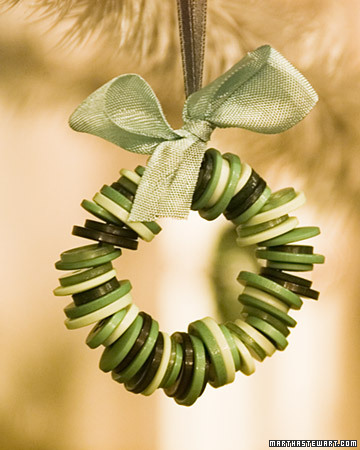
It's been a while since I've blogged because Scott and I have been enjoying some downtime with family in VA and an extended honeymoon/vacation in South Carolina (pics will be posted soon). While on vacation we went to several different Christmas shops trying to find some eccentric ornaments. This Christmas will be our first together so we wanted to find a cute ornament for the occasion. After searching several different shops in the low country, we found a snowman ornament made out of the easily-recognizable sock monkey material (red & grey). As soon as I saw I knew that was what I wanted for our first ornament together!
While searching the many ornament shops (with the other weirdos who don't find looking at Christmas paraphernalia in the middle of summer unnerving) I found many very cute ornaments that I could easily make with some felt, buttons, and other simple materials. So in addition to working on the vacation scrapbook, I will be making a trip to Michael's for some materials to make ornaments! Here are some of my favorites after googling online:
Thursday, 10 June 2010
.another experiment: why do you write?.
I just finished writing a paper in my Lit. Theory class that questioned and explored the authorial intent of a collection of Holocaust poems called, I Never Saw Another Butterfly. The collection was written by young children imprisoned in the concentration camp of Terezin. A particular quote by Walter Benjamin, in his article, "Task of the Translator," sparked my interest in discussing this topic. His quote reads, "...in the appreciation of a work of art or an art form, consideration of the receiver never proves fruitful […] no poem is intended for the reader, no picture for the beholder, no symphony for the listener." I found this quote extremely problematic, especially as a writer.
In my paper, I discussed how, when reading the poems themselves and considering the circumstances in which they were created, a modern-day audience would think that the young children lived on the very idea that their poems would one day be read by others. However, because we were not present during the act of their writing, nor did we get the chance to question their authorial intent, we as a present-day post-Holocaust audience, will never have the authority to answer this question. Frustrating, huh?
Indeed, after writing this paper, I still cannot wrap my head around what Benjamin's quote means for writers. I can assume that, as a writer himself, he considered that his words would one day be read by a future audience (several of his articles and essays were published during his lifetime), and I understand that he is discussing the constraints that can come along with writing with a type of audience in mind; when we do not consider a particular audience, we can write free, unbridled meditations. Perhaps Emily Dickinson is a prime example of this notion. Although she gave her poems to others as gifts and her poems were read by others during her lifetime, she writes countless poems about the diminishing factor that publishing can cause for great art. Once such poem is called "Fame:"
Returning to Benjamin's quote, he too greatly emphasizes the "unfruitful" art that can arise when one does consider an audience.
It made me question why I, myself, write. I can say that having had this blog for a few months now, I write a little more deliberately, knowing that others will possibly stumble onto these words and read them. However, I have found that in having a place where I can freely publish my thoughts and words, my poetry-writing has decreased tremendously in the last few months (this could also be due to the fact that I've not had too many bouts with insomnia lately, which is when I usually write poems). This pattern could be unrelated to the presence of this blog, but it is certainly disheartening to myself as a poet. Perhaps, in order to write (and create "fruitful art," as Benjamin writes) we must first step away from the need to publish and write merely to write.
Now I know in the case of the children writing during the Holocaust, their reasons for writing were very different from mine and many present-day writers. All theories questioning the motivations behind writing during the Holocaust point to three basic reasons: writing as resistance, writing for survival, and writing to remember. These are all very probable reasons for why these young children were writing, along with the fact that their teacher, Friedl Dicker-Brandeis, gave them small assignments and art lessons in a small school-like setting of the camp. It's hard for me to believe that these children were only writing in response to assignments, however, because they depict the events occurring around them with such urgency and detail. But like I mentioned above, we can never know for sure to whom, or for whom, or with what intention they were writing.
So, this is a question for my fellow writers, poets, and bloggers (another experiment if you will)...why do you write? Do you consider any type of audience or do you have to step away from your knowledge that others will/can perhaps read your words?
In my paper, I discussed how, when reading the poems themselves and considering the circumstances in which they were created, a modern-day audience would think that the young children lived on the very idea that their poems would one day be read by others. However, because we were not present during the act of their writing, nor did we get the chance to question their authorial intent, we as a present-day post-Holocaust audience, will never have the authority to answer this question. Frustrating, huh?
Indeed, after writing this paper, I still cannot wrap my head around what Benjamin's quote means for writers. I can assume that, as a writer himself, he considered that his words would one day be read by a future audience (several of his articles and essays were published during his lifetime), and I understand that he is discussing the constraints that can come along with writing with a type of audience in mind; when we do not consider a particular audience, we can write free, unbridled meditations. Perhaps Emily Dickinson is a prime example of this notion. Although she gave her poems to others as gifts and her poems were read by others during her lifetime, she writes countless poems about the diminishing factor that publishing can cause for great art. Once such poem is called "Fame:"
Fame is a fickle food
Upon a shifting plate
Whose table once a
Guest but not
The second time is set
Whose crumbs the crows inspect
And with ironic caw
Flap past it to the
Farmer’s corn
Men eat of it and die.Returning to Benjamin's quote, he too greatly emphasizes the "unfruitful" art that can arise when one does consider an audience.
It made me question why I, myself, write. I can say that having had this blog for a few months now, I write a little more deliberately, knowing that others will possibly stumble onto these words and read them. However, I have found that in having a place where I can freely publish my thoughts and words, my poetry-writing has decreased tremendously in the last few months (this could also be due to the fact that I've not had too many bouts with insomnia lately, which is when I usually write poems). This pattern could be unrelated to the presence of this blog, but it is certainly disheartening to myself as a poet. Perhaps, in order to write (and create "fruitful art," as Benjamin writes) we must first step away from the need to publish and write merely to write.
Now I know in the case of the children writing during the Holocaust, their reasons for writing were very different from mine and many present-day writers. All theories questioning the motivations behind writing during the Holocaust point to three basic reasons: writing as resistance, writing for survival, and writing to remember. These are all very probable reasons for why these young children were writing, along with the fact that their teacher, Friedl Dicker-Brandeis, gave them small assignments and art lessons in a small school-like setting of the camp. It's hard for me to believe that these children were only writing in response to assignments, however, because they depict the events occurring around them with such urgency and detail. But like I mentioned above, we can never know for sure to whom, or for whom, or with what intention they were writing.
So, this is a question for my fellow writers, poets, and bloggers (another experiment if you will)...why do you write? Do you consider any type of audience or do you have to step away from your knowledge that others will/can perhaps read your words?
Saturday, 5 June 2010
.market-inspired salads.
Scott and I love eating salads...they're a light and delicious meal and you're able to sneak in vegetables amid the dressing, cheese and croutons. That being said, even though we eat them we don't eat different varieties of salads. Usually our salads will consist of Romaine lettuce, carrots, cheese, croutons, bacon bits, and whatever dressing we want that day (and we keep a large variety in the fridge at all times!).
However, after making a very successful trip to the farmer's market this weekend, we were able to venture into some different types of salads. The first salad contained fresh Romaine, spinach, and Lamb's lettuce, so we definitely had a variety of greens. Then I tossed in some large chunks of tomatoes, broccoli, some mushrooms, cheese, and Italian Vinaigrette dressing. This would have been a fine meal by itself along with some bruschetta, but we had also picked up some rabbit tenderloins (another adventurous move) and marinated them in some red strawberry wine. After they thawed we dipped them in an egg wash and brushed on some bread crumbs and salt & pepper. To top off this meal, we had some delicious sweet corn with it as well.
For dinner I was craving salad again so I put together our three greens, some chopped strawberries, mushrooms, shredded parmesan, crushed black pepper, and Caesar vinaigrette.
We are very glad to have found a farmer's market near us with a great variety of produce, meat, and bread! Here are some other recipes for salads that I hope to be trying soon: Recipes from AllRecipes.com
Tuesday, 1 June 2010
.how do you "see" characters? & the summer reading list.
A few weeks ago, one of my classmates in my Lit. Theory class posed a very interesting question that I thought I would share: How do you imagine/see characters in books? My other classmates answered several different ways; some said they saw the characters only as their name, not necessarily as a person (it was interesting that these students also had either contacts or glasses and did not have colorful dreams; they claimed that their dreams were either blurry or in black & white); others said they saw the characters fully detailed and colorful in their minds, imagining their clothes, their hair color, mannerisms etc. Still, others imagined a person they knew or imagined characteristics of their own, totally disregarding the author's details of the character.
Personally, I usually see the character as the author depicts him/her and view them this way throughout the novel whenever their name is mentioned. This becomes a problem, however, when I see a movie first (or movie preview as with "The Time Traveler's Wife"), then I usually can't get those characters' faces and mannerisms out of my head. I however, don't have glasses or contacts, and I dream in full color. So, I wonder if our imaginations have anything to do with our sight, or vice versa. It seemed to be a pattern that, at least in our Lit. Theory class, if a person does not have dreams in color or they are blurred, that person is more apt to see characters only as their names or in less details than those who are closer to 20/20 vision. This presents an interesting experiment!! Help me out here....how do you "see" characters when you are reading?
Now that my classes are winding down and all papers/exams will be due next week, I am making my summer reading list and here's what I've got so far:
(I'm currently reading "The Piano Teacher"by Janice Y.K. Lee - mostly while I bike at our gym)
Personally, I usually see the character as the author depicts him/her and view them this way throughout the novel whenever their name is mentioned. This becomes a problem, however, when I see a movie first (or movie preview as with "The Time Traveler's Wife"), then I usually can't get those characters' faces and mannerisms out of my head. I however, don't have glasses or contacts, and I dream in full color. So, I wonder if our imaginations have anything to do with our sight, or vice versa. It seemed to be a pattern that, at least in our Lit. Theory class, if a person does not have dreams in color or they are blurred, that person is more apt to see characters only as their names or in less details than those who are closer to 20/20 vision. This presents an interesting experiment!! Help me out here....how do you "see" characters when you are reading?
Now that my classes are winding down and all papers/exams will be due next week, I am making my summer reading list and here's what I've got so far:
(I'm currently reading "The Piano Teacher"by Janice Y.K. Lee - mostly while I bike at our gym)
"Hotel on the Corner of Bitter and Sweet" by Jamie Ford and "Unfinished Desires" by Gail Godwin
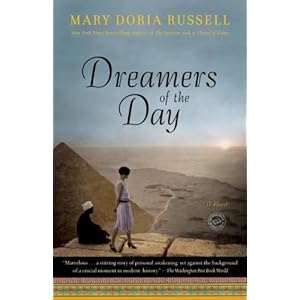
"The Postmistress" by Sarah Blake and "Dreamers of the Day" by Maria Doria Russell
"Imperfect Birds" by Anne Lamott and "Animal, Vegetable, Miracle" by Barbara Kingsolver
"The Tortoise and the Hare" by Elizabeth Jenkins and Fifth Avenue, 5 A.M.: Audrey Hepburn, Breakfast at Tiffany's, and the Dawn of the Modern Woman, by Sam Wasson
Let the summer reading begin!! : )
Subscribe to:
Posts (Atom)